正在确认阅读权限…
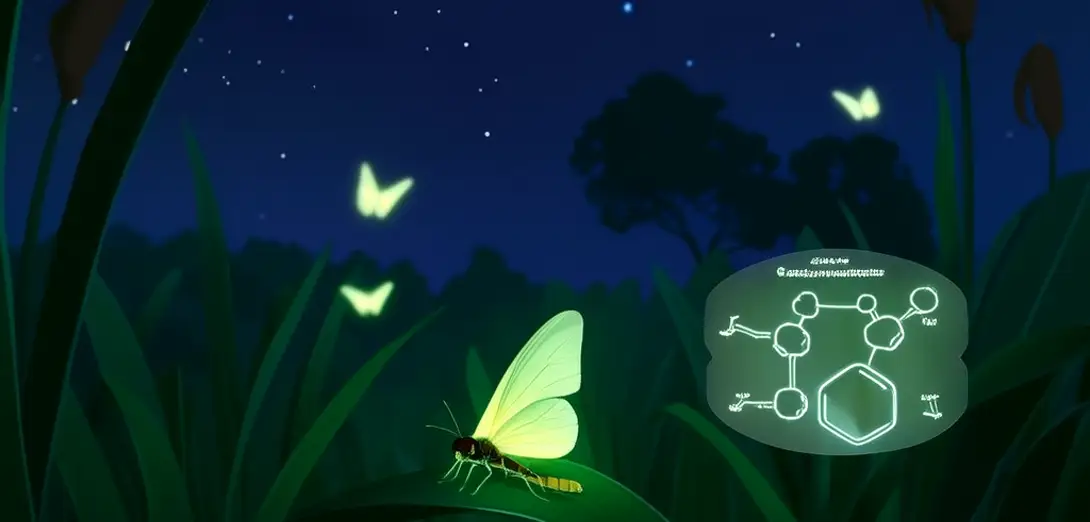
How Do Fireflies Produce Cold Light Without Burning?
萤火虫如何发出不发热的冷光而不燃烧?
-
Fireflies produce light through a chemical reaction called bioluminescence, not combustion.萤火虫通过一种名为生物发光的化学反应发光,而非燃烧。
-
A molecule named luciferin reacts with oxygen, aided by the enzyme luciferase inside their bodies.一种名为荧光素的分子在体内荧光素酶的催化下与氧气发生反应。
-
This reaction releases almost all energy as visible light—less than 0.01% becomes heat.该反应几乎将全部能量以可见光形式释放,转化为热量的部分不足0.01%。
-
Because no flame or high temperature is involved, it’s known as ‘cold light’.由于不涉及火焰或高温,这种光被称为‘冷光’。
-
The color of light varies slightly among species due to subtle differences in luciferin structure.不同物种的发光颜色略有差异,源于荧光素分子结构的细微差别。
-
Fireflies control blinking by regulating oxygen flow to light-producing cells in their abdomen.萤火虫通过调控腹部发光细胞的供氧量来控制闪烁。
-
Their flashing patterns serve as mating signals, with each species having a unique rhythm.它们的闪光模式用作求偶信号,每种萤火虫都有独特的闪烁节奏。
-
Researchers use firefly enzymes in labs to detect ATP, a key energy molecule in living cells.研究人员在实验室中利用萤火虫酶检测ATP——活细胞中的关键能量分子。
-
Unlike LEDs or bulbs, bioluminescence needs no external power—only biological fuel.与LED或灯泡不同,生物发光无需外部电源,仅需生物燃料。
-
This natural system inspires eco-friendly lighting designs and medical imaging tools.这一自然系统为环保照明设计和医学成像工具提供了灵感。