正在确认阅读权限…
Why Does Salt Melt Ice on Roads But Not on Frozen Lakes?
为什么盐能融化道路结冰却不能融化湖面厚冰?
-
Salt lowers water’s freezing point, so ice melts when salt dissolves into surface moisture.盐能降低水的冰点,因此盐溶解在冰面水分中时,冰就会融化。
-
On roads, thin ice layers mix easily with salt, forming brine that spreads and accelerates melting.道路上的薄冰层易与盐混合,形成卤水,迅速扩散并加速融化。
-
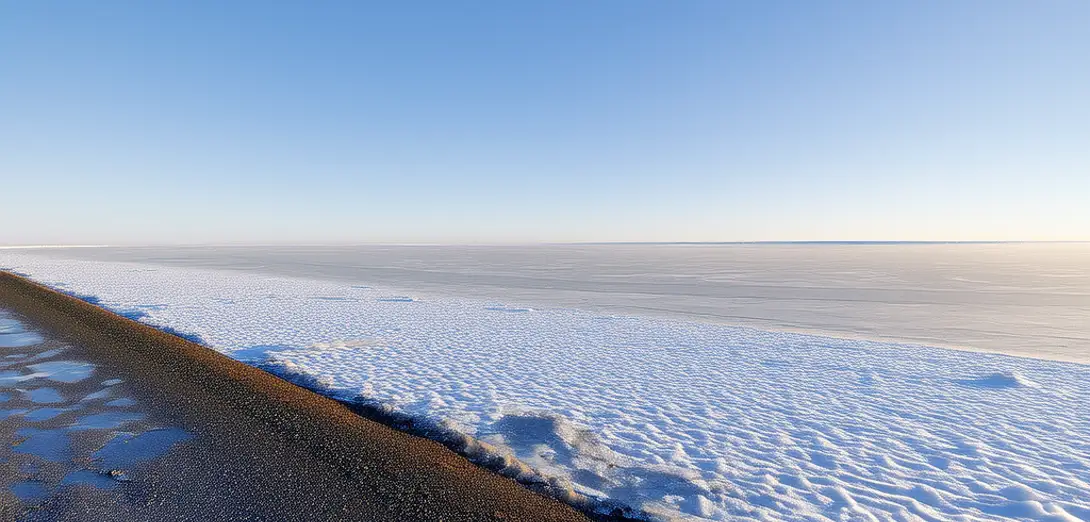
Frozen lakes have thick, dense ice with little surface liquid—so salt cannot dissolve effectively.结冰的湖泊冰层厚而密实,表面几乎没有液态水,盐难以有效溶解。
-
Without liquid water to carry ions, salt crystals just sit on top without triggering melting.没有液态水输送离子,盐晶体只能停留在冰面,无法引发融化。
-
Wind, sunlight, and traffic help road salt work faster, but lakes lack those factors.风、阳光和车流能加快道路融雪盐的作用,但湖泊缺乏这些条件。
-
Even large amounts of salt won’t melt deep lake ice because heat transfer is too slow.即使大量撒盐也无法融化湖中深层冰,因为热量传递太慢。
-
Scientists measure ‘eutectic temperature’—the lowest point where saltwater stays liquid—at -21°C.科学家测定‘共晶温度’——盐水保持液态的最低温度为-21°C。
-
Below that, salt stops working entirely, regardless of quantity or mixing.低于该温度,无论盐量多少或是否搅拌,盐都完全失效。
-
In nature, only shallow ponds or icy puddles respond well to small salt doses.在自然界中,只有浅水池塘或积冰水洼对少量盐有良好反应。
-
That’s why winter safety teams never use salt on frozen rivers or lakes.因此冬季安全团队从不在结冰的河流或湖泊上使用盐。