正在确认阅读权限…
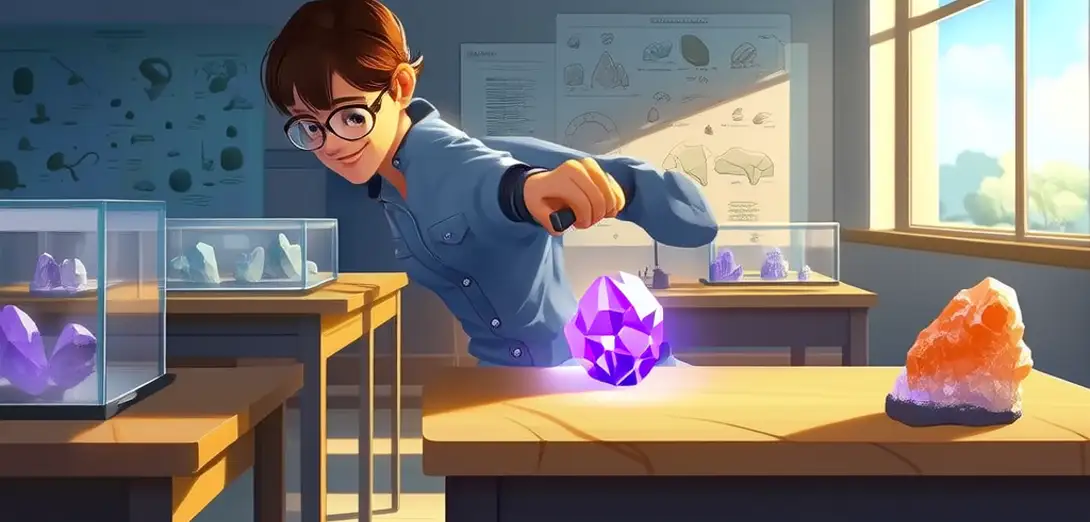
Why Do Certain Rocks Glow Under Ultraviolet Light?
为什么某些岩石在紫外线照射下会发光?
-
Some minerals like fluorite and calcite absorb invisible ultraviolet light and re-emit it as visible light.萤石、方解石等矿物能吸收不可见的紫外线,并将其重新发射为可见光。
-
This process is called fluorescence, and it happens because electrons in the mineral jump to higher energy levels.这一过程称为荧光,源于矿物中电子跃迁至更高能级。
-
When those electrons fall back down, they release energy in the form of colored light we can see.当这些电子回落时,便以我们可见的彩色光形式释放能量。
-
The specific color depends on the mineral’s chemical composition and tiny impurities inside its crystal structure.具体颜色取决于矿物的化学成分及其晶体结构中的微量杂质。
-
Not all rocks glow—only those with fluorescent elements such as uranium, manganese, or rare-earth metals.并非所有岩石都会发光——只有含铀、锰或稀土金属等荧光元素的岩石才会。
-
Scientists use UV lamps to identify minerals in fieldwork and geological surveys accurately.科学家使用紫外灯在野外考察和地质调查中精准识别矿物。
-
Fluorescence differs from phosphorescence because the light stops immediately when the UV source is removed.荧光与磷光不同:一旦移除紫外线源,荧光立即消失。
-
Even though UV light is harmful in large doses, the small amounts used for rock testing are safe.尽管大剂量紫外线有害,但岩石检测所用的小剂量是安全的。
-
This natural phenomenon helps researchers understand how minerals formed deep underground over millions of years.这一自然现象帮助研究人员理解矿物在地下深处历经数百万年的形成过程。
-
Glowing rocks remind us that Earth holds many hidden optical secrets waiting to be discovered.发光的岩石提醒我们,地球蕴藏着许多尚待发现的隐秘光学奥秘。