正在确认阅读权限…
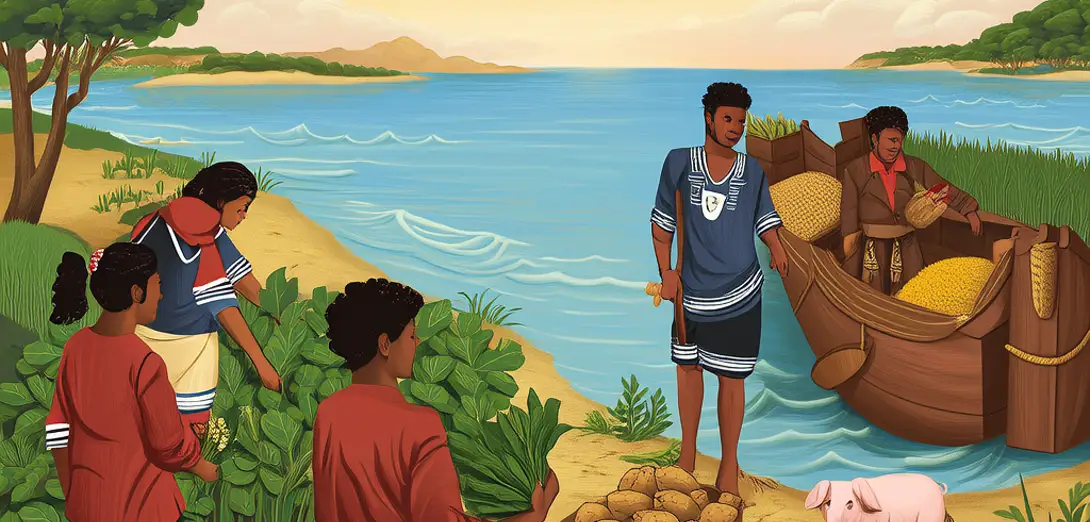
The Columbian Exchange: Two Worlds Meet
哥伦布大交换:两个世界的相遇
-
After Christopher Columbus landed in the Caribbean in 1492, plants, animals, and diseases began crossing the Atlantic.1492年哥伦布抵达加勒比海后,植物、动物和疾病开始跨越大西洋传播。
-
Europeans brought wheat, horses, cattle, and smallpox to the Americas, where native peoples had no immunity.欧洲人将小麦、马、牛和天花带到美洲,而当地原住民对此毫无免疫力。
-
Native crops like maize, potatoes, tomatoes, and chocolate transformed diets and farming in Africa, Asia, and Europe.玉米、马铃薯、番茄和巧克力等原产作物改变了非洲、亚洲和欧洲的饮食与农业。
-
The potato alone helped feed growing populations in Ireland and parts of Germany and China.仅马铃薯一项,就帮助养活了爱尔兰及德国、中国部分地区不断增长的人口。
-
Sugar plantations in the Caribbean relied on enslaved Africans, whose forced labor fueled European wealth.加勒比地区的甘蔗种植园依赖被奴役的非洲人,其强迫劳动助推了欧洲的财富积累。
-
New foods increased caloric intake and supported population growth, but disease killed up to 90% of some Indigenous groups.新食物提高了热量摄入、支撑人口增长,但疾病却导致部分原住民族群人口锐减高达90%。
-
This exchange was not equal — it reshaped ecosystems, economies, and societies in deeply uneven ways.这种交流并不平等——它以极不均衡的方式重塑了生态系统、经济与社会。
-
Still, it marked the true beginning of globalization, linking continents through biology and commerce.然而,它标志着全球化的真正开端,通过生物与商业将各大洲联结起来。