正在确认阅读权限…
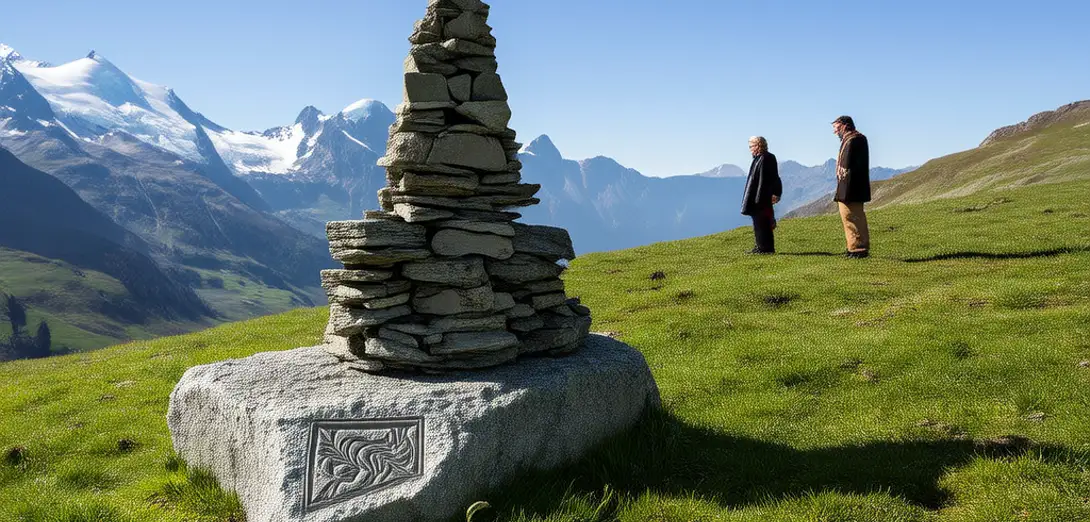
Geography and Environmental Calibration: Alpine Pasture Boundaries as Snowmelt Chronometers (Batch 0001-015)
地理与环境校准:阿尔卑斯高山牧场边界作为融雪计时器
-
Swiss alpine pastures employ boundary cairns not as static markers but as calibrated instruments whose shadow length at solar noon signals optimal cattle ascent dates based on snowpack meltwater timing.瑞士高山牧场使用界石堆,不仅作为静态标记,更作为校准仪器:正午时分石堆的影长,依据积雪融水时间,指示最佳放牧上山日期。
-
Each cairn’s height and stone composition are tuned to local microclimates—granite cairns in Valais melt faster than limestone ones in Graubünden, creating region-specific phenological calendars.每座界石堆的高度与石材构成均针对当地微气候校准——瓦莱州的花岗岩界石堆比格劳宾登州的石灰岩界石堆融化更快,由此形成区域特异性物候历。
-
Shepherds record cairn-shadow trajectories in leather-bound ledgers, correlating deviations with glacier retreat rates measured by repeat photogrammetry since 1894.牧人将界石堆影迹轨迹记录于皮面册中,并将偏差与自1894年以来通过重复摄影测量所得的冰川退缩速率相关联。
-
Pasture access permits now require cairn-shadow verification reports signed by three generations of herders, merging empirical observation with intergenerational accountability.牧场准入许可如今须附三世代牧人签署的界石堆影长验证报告,使实证观察与代际责任融为一体。
-
Satellite-derived snow water equivalent data validates these visual calibrations, confirming their accuracy within ±2.3 days across 127 seasons.卫星反演的雪水当量数据验证了这些目视校准,证实其在127个牧季中误差不超过±2.3天。
-
Cairn placement follows medieval monastic surveying traditions where sightlines intersect celestial events and spring emergence points—making boundaries simultaneously astronomical, hydrological, and theological.界石堆布设遵循中世纪修道院测绘传统,视线交汇点对应天文事件与春季融水涌出点,使边界兼具天文、水文与神学意义。
-
Municipal authorities adjust hay harvest quotas based on cairn-shadow progression, treating the landscape itself as an analog computing device for resource allocation.市政当局依据界石堆影长进展调整干草收割配额,将整片景观视为资源分配的模拟计算装置。
-
When cairns become obscured by early-season avalanches, herders deploy portable brass gnomons calibrated to the same latitude, maintaining temporal continuity despite physical disruption.若早春雪崩掩埋界石堆,牧人即启用便携黄铜日晷仪,按相同纬度校准,确保时间连续性不受物理中断影响。
-
This system reframes climate adaptation not as technological retrofitting but as deepening fidelity to inherited calibration protocols.该体系将气候适应重新定义为对传承校准规程的深度恪守,而非技术性改造。
-
Boundary disputes are resolved by comparing cairn-shadow logs with ice-core δ¹⁸O records, treating geological and pastoral time as mutually legible registers.边界纠纷通过比对界石堆影长日志与冰芯δ¹⁸O记录解决,视地质时间与牧业时间为彼此可读的双重纪年系统。
-
Young apprentices learn cairn reading before GPS operation, mastering the art of interpreting light, stone, and meltwater as integrated signal systems.年轻学徒须先掌握界石堆读影技艺,再学习GPS操作,精熟光、石、融水三者融合的信号解读艺术。
-
Alpine pasture governance thus operates through embodied chronometry—where geography measures time, and time governs geography.阿尔卑斯牧场治理 thus 依托具身化计时法——地理即时间之尺,时间亦为地理之律。