正在确认阅读权限…
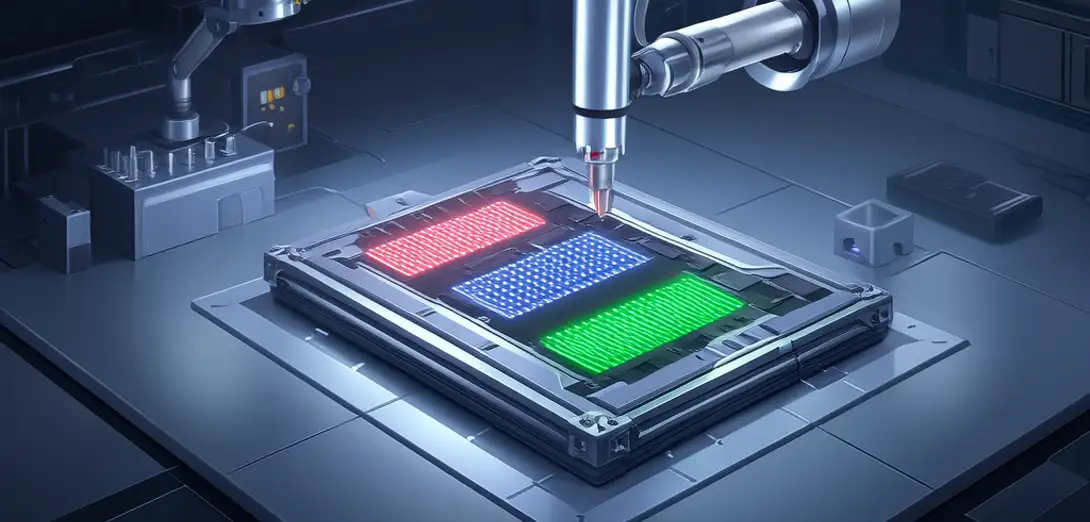
How MicroLED Displays Fix Themselves During Mass Transfer
MicroLED显示屏如何在巨量转移中自我修复
-
MicroLED displays use millions of microscopic red, green, and blue LEDs—each smaller than a human hair—to create vibrant, efficient screens.MicroLED显示屏采用数百万个微米级红、绿、蓝LED——每个比人发还细——实现高亮效、高色彩表现的屏幕。
-
Mass transfer moves tens of thousands of these tiny chips from a growth wafer onto a display backplane in one go—like stamping with microscopic ink.巨量转移技术一次性将数万个微型芯片从生长晶圆转移到显示背板上,如同用微观墨水盖章。
-
Because defects are inevitable at such small scales, engineers build redundancy: extra pixels beyond the final resolution target.由于如此微小尺度下缺陷不可避免,工程师设计了冗余像素——即额外布置超出目标分辨率所需的像素。
-
High-resolution cameras scan every transferred chip immediately, detecting misalignments, missing units, or brightness mismatches.高分辨率相机立即扫描每个已转移芯片,检测偏移、缺失或亮度不一致等问题。
-
A laser-based repair system then either re-welds faulty connections or activates backup subpixels located nearby.激光修复系统随即重新焊接故障连接,或就近启用备用子像素。
-
Some fabs use electrostatic pickup tools that gently lift and reposition chips with nanometer-level precision if first placement fails.部分晶圆厂采用静电拾取工具,在首次贴装失败时以纳米级精度轻柔拾起并重新定位芯片。
-
Color uniformity is adjusted later by calibrating current flow to each subpixel—software compensates for minor material variations.色彩均匀性后续通过调节各子像素电流实现——软件自动补偿材料微小差异。
-
Yield rates have improved from under 70% to over 99.99% in top-tier production lines thanks to real-time feedback loops.得益于实时反馈闭环,顶尖产线良率已从不足70%提升至99.99%以上。
-
This convergence of micro-manipulation robotics, optics, and adaptive firmware makes large-scale MicroLED viable.微操作机器人、光学系统与自适应固件的融合,使大规模MicroLED量产成为现实。
-
Soon, these self-correcting displays may replace OLEDs in everything from smartwatches to augmented-reality glasses.不久后,这类自校正显示屏或将取代OLED,应用于智能手表乃至增强现实眼镜等全场景。