正在确认阅读权限…
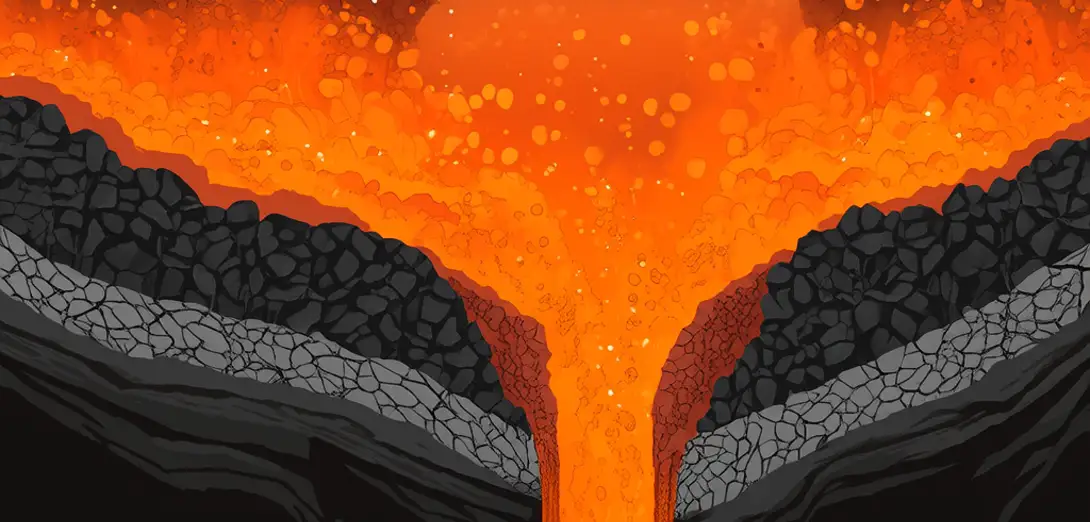
What Happens Inside a Volcano Before It Erupts?
火山喷发前,内部究竟发生了什么?
-
Magma rises from deep underground when pressure builds due to gas expansion and tectonic movement.当地下压力因气体膨胀和构造运动而增大时,岩浆从深处上升。
-
Dissolved gases like water vapor, CO₂, and sulfur dioxide separate from magma as pressure drops near the surface.当压力在地表附近降低时,水蒸气、二氧化碳和二氧化硫等溶解气体便从岩浆中析出。
-
These expanding bubbles increase internal pressure until the rock above can no longer contain them.这些不断膨胀的气泡使内部压力持续升高,直至上方岩石无法再承受。
-
Seismic monitors detect tiny earthquakes caused by magma fracturing surrounding crustal rock.地震监测仪可探测到岩浆破裂周围地壳岩石所引发的微小地震。
-
Ground swelling occurs as magma chambers fill, measurable by GPS and satellite radar interferometry.岩浆房充填导致地面隆起,可通过GPS和卫星雷达干涉测量技术观测。
-
Gas emissions spike days or weeks before eruptions, especially sulfur dioxide and carbon dioxide ratios.喷发前数天或数周,气体排放量骤增,尤其是二氧化硫与二氧化碳的比例变化。
-
Changes in groundwater temperature, chemistry, and flow also signal underground thermal and chemical shifts.地下水温度、化学成分和流量的变化,也反映出地下热力与化学状态的改变。
-
Volcanologists combine all these clues to issue timely warnings, though precise timing remains challenging.火山学家综合所有这些迹象及时发布预警,但精确预测喷发时间仍具挑战性。
-
Not all magma reaches the surface — sometimes it cools underground, forming intrusive igneous rock instead.并非所有岩浆都会到达地表——有时会在地下冷却,形成侵入型火成岩。
-
Each volcano has its own ‘personality’, shaped by magma composition, structure, and regional geology.每座火山都有其独特的‘个性’,由岩浆成分、结构及区域地质共同塑造。