正在确认阅读权限…
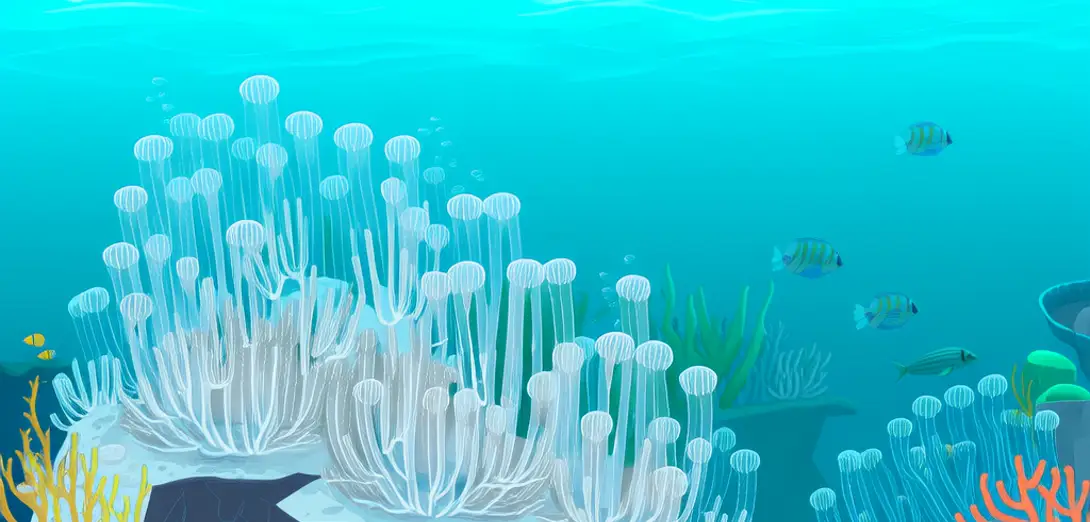
How Do Coral Reefs Build Massive Structures Without Any Bones or Shells?
珊瑚礁如何在没有骨骼或外壳的情况下建造巨大结构?
-
Coral reefs are built by tiny animals called polyps that live in colonies underwater.珊瑚礁由生活在水下群落中的微小动物——珊瑚虫建造。
-
Each polyp secretes a hard external skeleton made of calcium carbonate from seawater minerals.每只珊瑚虫从海水中提取矿物质,分泌出坚硬的碳酸钙外骨骼。
-
Over centuries, generations of polyps add layer upon layer, forming massive limestone frameworks.历经数百年,一代代珊瑚虫层层堆积,形成巨大的石灰岩骨架。
-
Algae living inside coral tissues provide energy through photosynthesis, fueling this growth process.生活在珊瑚组织内的藻类通过光合作用提供能量,驱动这一生长过程。
-
Water temperature, light, and low nutrient levels must stay within narrow ranges for reefs to thrive.水温、光照和低营养水平必须维持在狭窄范围内,珊瑚礁才能繁盛。
-
When stressed by warming or pollution, corals expel their algae and bleach, halting construction.当遭遇升温或污染等压力时,珊瑚会排出共生藻类而白化,停止建造。
-
Reef growth rates vary from 0.3 to 10 centimeters per year depending on species and conditions.珊瑚礁年生长速率因物种和环境而异,介于0.3至10厘米之间。
-
Some reefs, like Australia’s Great Barrier Reef, are over 20 million years old and span 2,300 kilometers.一些珊瑚礁(如澳大利亚大堡礁)已有超过2000万年历史,绵延2300公里。
-
Unlike shells or bones, coral skeletons are not part of the animal’s body but external deposits.与贝壳或骨骼不同,珊瑚骨骼并非动物身体的一部分,而是外部沉积物。
-
This collective, slow-building strategy makes reefs the largest biological structures visible from space.这种集体性、缓慢累积的建造方式,使珊瑚礁成为太空中可见的最大生物结构。