正在确认阅读权限…
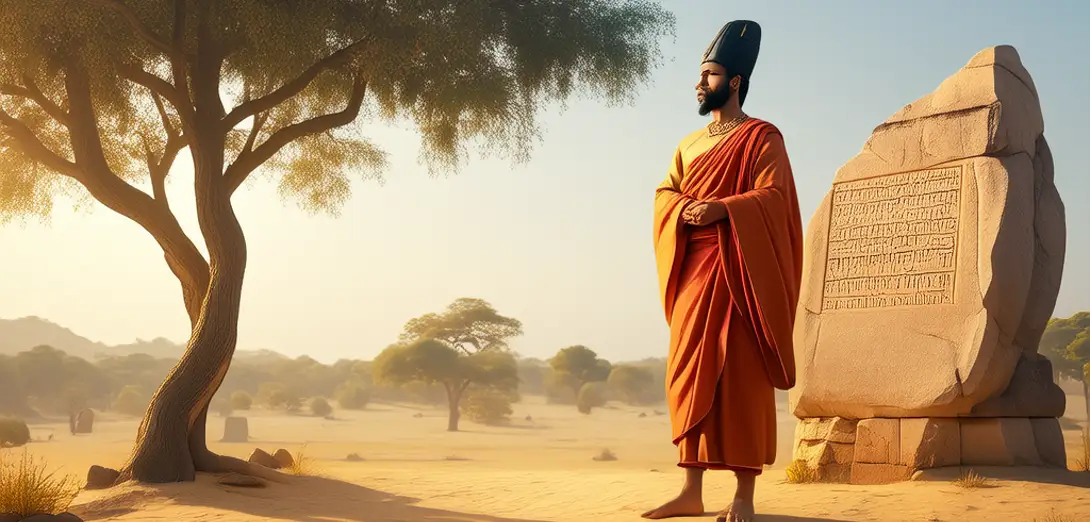
The Edicts of Ashoka: Dharma in Stone
阿育王诏书:镌刻于石的正法
-
After the bloody Kalinga War in 261 BCE, Emperor Ashoka of India renounced violence and embraced Buddhist ethics.公元前261年血腥的羯陵伽战争后,印度皇帝阿育王放弃暴力,皈依佛教伦理。
-
He ordered more than thirty rock and pillar edicts to be inscribed across his vast Mauryan Empire.他下令在广袤的孔雀帝国境内刻写三十多条岩刻与石柱敕令。
-
These messages promoted compassion, tolerance, nonviolence, and respect for all living beings without religious exclusion.这些敕令倡导慈悲、宽容、非暴力,并尊重一切生命,不排斥任何宗教。
-
Officials called 'Dhamma Mahamatras' traveled widely to explain the edicts and resolve local disputes fairly.名为“法大官”的官员四处巡行,宣讲敕令并公正调解地方纠纷。
-
Unlike earlier royal proclamations, Ashoka’s texts addressed common people directly in regional languages like Prakrit.与早期王室诏书不同,阿育王的文本直接以普拉克里特等地方语言面向民众发布。
-
His pillars featured polished sandstone and crowned with lion sculptures symbolizing courage and righteous rule.他的石柱采用抛光砂岩制成,顶端饰有象征勇气与正法统治的狮子雕像。
-
The edicts also described welfare measures such as roadside trees, wells, and medical care for humans and animals.敕令还记载了道路植树、凿井、人畜医疗等福利措施。
-
Though the Mauryan Empire declined soon after Ashoka’s death, his moral vision endured in South and Southeast Asia.尽管孔雀帝国在阿育王去世后迅速衰落,其道德理念却在南亚与东南亚绵延不绝。
-
Scholars consider these inscriptions among the earliest surviving state-sponsored ethical declarations in world history.学者视这些铭文为世界历史上最早存世的、由国家赞助的伦理宣言之一。
-
They reveal how rulers once used public writing not just for power—but for moral education and social harmony.它们揭示出统治者曾如何运用公共文字,不仅彰显权力,更致力于道德教化与社会和谐。