正在确认阅读权限…
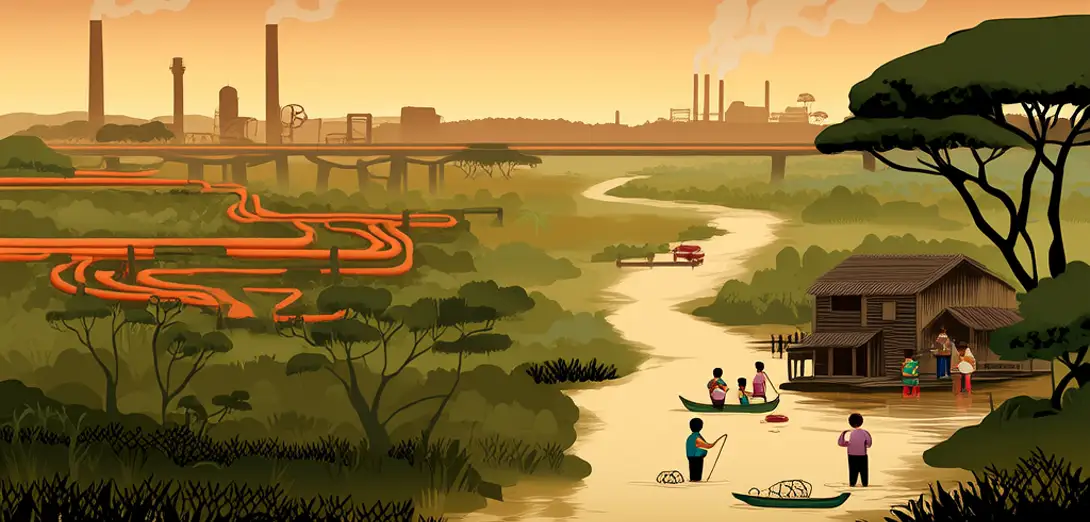
The Niger Delta: Oil, Wetlands, and Uneven Development
尼日尔三角洲:石油、湿地与不均衡发展
-
Nigeria’s Niger Delta holds Africa’s largest oil reserves, yet over 60% of its 31 million residents live on less than $1.90 a day.尼日利亚尼日尔三角洲拥有非洲最大的石油储量,但其3100万居民中超过60%每天生活费不足1.90美元。
-
Oil spills from aging pipelines and illegal bunkering have contaminated mangrove forests—the world’s third-largest wetland ecosystem.老化管道泄漏和非法盗油导致红树林森林遭受污染——这是全球第三大湿地生态系统。
-
Mangroves act as natural carbon sinks and storm buffers, but over 200 square kilometers disappeared between 2000 and 2020.红树林是天然碳汇和风暴屏障,但在2000至2020年间已消失逾200平方公里。
-
Ogoni and Ijaw communities lead grassroots movements demanding cleanup, fair royalties, and investment in clean water and schools.奥戈尼族和伊乔族社区发起基层运动,要求清理污染、公平分配特许权使用费,并投资建设清洁水源和学校。
-
The government launched the Hydrocarbon Pollution Remediation Project (HYPREP) in 2017, though implementation remains uneven.政府于2017年启动碳氢化合物污染修复项目(HYPREP),但执行效果参差不齐。
-
Fishermen report declining catches and deformed fish, linking health issues to decades of unregulated petroleum exposure.渔民报告渔获量减少、鱼类畸形,并将健康问题归因于数十年来未受监管的石油暴露。
-
Solar microgrids now power clinics and schools in remote villages previously excluded from the national electricity grid.太阳能微电网现已为偏远村庄的诊所和学校供电,这些地区此前被排除在全国电网之外。
-
Ecologists collaborate with local elders to restore native palm species and reintroduce oyster beds that filter polluted waters.生态学家与当地长者合作,恢复本土棕榈树种,并重建能净化污染水体的牡蛎床。