正在确认阅读权限…
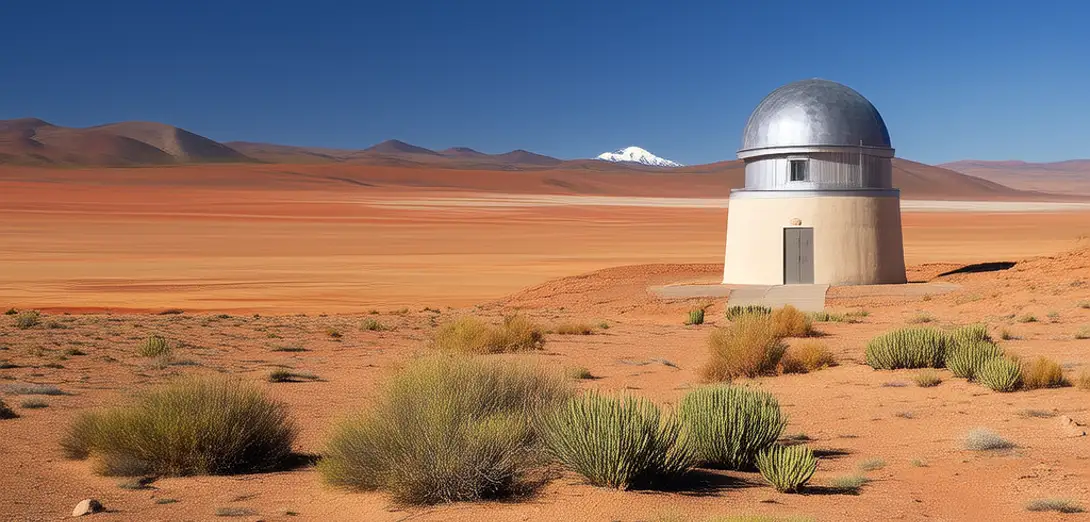
The Atacama: Where Aridity Meets Astronomical Clarity
阿塔卡马:干旱与天文通透性的地理耦合
-
The Atacama Desert in northern Chile holds the world’s lowest average rainfall on Earth.智利北部的阿塔卡马沙漠是地球上平均降水量最低的地区。
-
Its hyper-arid core receives less than 1 mm of rain annually, creating soil conditions nearly sterile.其极度干旱的核心地带年降雨量不足1毫米,土壤近乎无菌。
-
High elevation, coastal fog banks, and the rain shadow of the Andes all converge to suppress precipitation.高海拔、沿海雾带以及安第斯山脉的雨影效应共同抑制了降水。
-
This extreme dryness preserves ancient landforms and enables unparalleled atmospheric transparency for telescopes.这种极端干燥保存了古老的地貌,并为望远镜提供了无与伦比的大气通透性。
-
Over 40% of the world’s astronomical observation capacity now operates from this single desert region.目前全球超过40%的天文观测能力集中于这片沙漠。
-
Salt flats, lava fields, and wind-sculpted mesas reveal how aridity reshapes surface morphology over millennia.盐滩、熔岩原和风蚀台地揭示了干旱如何在数千年间重塑地表形态。
-
Groundwater here is often fossilized—trapped underground for tens of thousands of years beneath impermeable layers.这里的地下水多为化石水——被不透水层封存于地下数万年之久。
-
Local microclimates vary sharply with altitude, generating narrow ecological bands across steep west-east gradients.当地微气候随海拔急剧变化,在陡峭的东西向梯度上形成狭窄的生态带。
-
Mining for lithium and copper exploits mineral concentrations formed by long-term evaporation cycles.锂和铜的开采利用了长期蒸发循环形成的高浓度矿物。
-
Yet even in this barren expanse, subsurface microbial life persists in hyper-saline aquifers.然而,即便在这片荒芜之地,嗜极微生物仍存活于高盐度地下水中。