正在确认阅读权限…
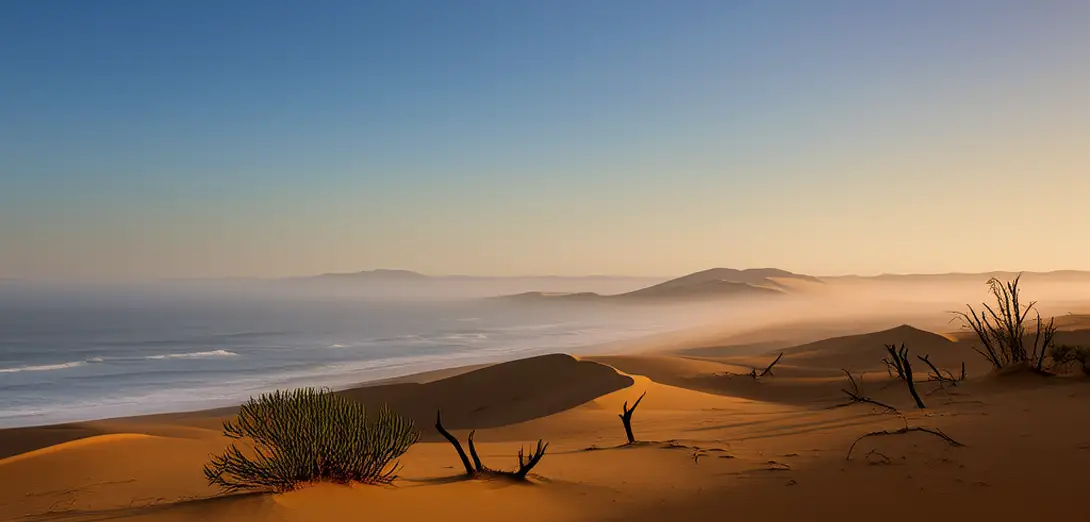
The Namib Fog Desert: Atmospheric Moisture Harvested by Landscape Architecture
纳米布雾漠:由地貌结构捕获的大气水分
-
The Namib Desert stretches along Namibia’s Atlantic coast where cold Benguela Current meets warm air masses.纳米布沙漠沿纳米比亚大西洋海岸延伸,寒流本格拉洋流在此与暖湿气团相遇。
-
Fog forms daily as moist ocean air cools rapidly over the cold upwelling waters offshore.湿润海风在近海冷上升流海域迅速冷却,每日形成雾。
-
This fog drifts inland, sustaining unique lifeforms like the Welwitschia plant and fog-basking beetles.雾向内陆飘移,滋养着百岁兰等独特植物及雾中取水的甲虫。
-
Topographic barriers such as the Naukluft Mountains force fog to condense at specific elevations and slopes.纳乌克卢夫山脉等地形屏障迫使雾在特定海拔和坡面凝结。
-
Certain gravel plains and inselbergs act as passive condensation surfaces due to thermal inertia differences.部分砾石平原和孤山因热惯性差异,成为被动凝结面。
-
Hydrological modeling shows fog drip contributes up to 40% of annual moisture in hyperarid zones.水文模型显示,在极度干旱区,雾滴贡献可达年水分总量的40%。
-
Unlike rainfall-dependent ecosystems, this system decouples water supply from seasonal precipitation patterns entirely.不同于依赖降雨的生态系统,该系统完全摆脱了季节性降水模式对水源的制约。
-
Remote sensing reveals micro-spatial variation in fog deposition that correlates with soil moisture gradients.遥感揭示雾沉降存在微空间差异,且与土壤湿度梯度密切相关。
-
Conservation planning now integrates fog capture potential into biodiversity corridor design.保护规划现已将雾捕获潜力纳入生物多样性廊道设计。
-
This desert redefines aridity—not as absence of water, but as redistribution of its phase and timing.这片沙漠重新定义了干旱——并非缺水,而是水相态与时间分布的转变。