正在确认阅读权限…
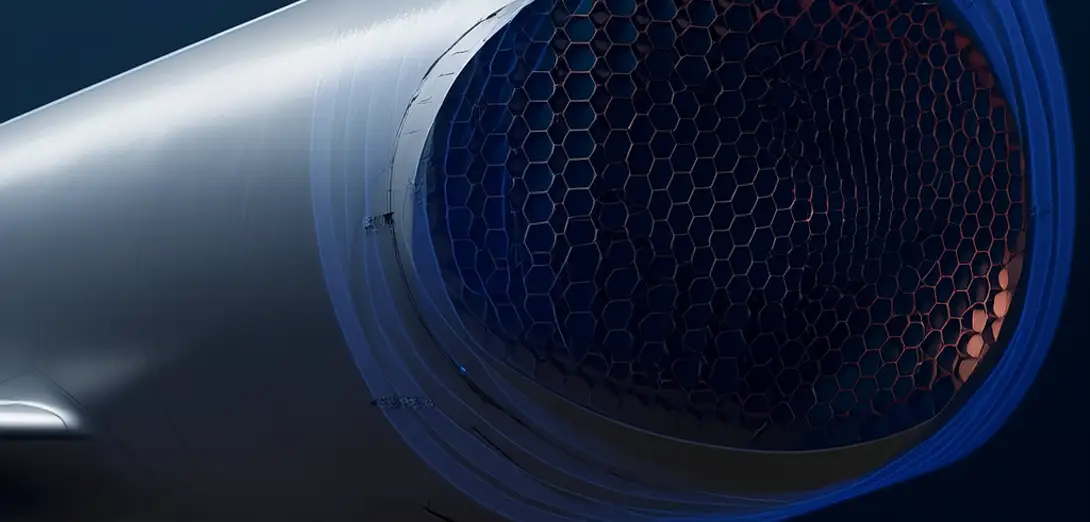
Metamaterial Cloaking and Intuitive Radar Wave Manipulation
超材料隐身与雷达波操控直觉
-
Metamaterial cloaking does not render objects invisible; rather, it redirects incident radar waves around a concealed volume using subwavelength resonant structures.超材料隐身并非让物体真正隐形,而是利用亚波长谐振结构将入射雷达波绕过被遮蔽区域。
-
The intuitive principle resembles water flowing around a smooth stone—except here, electromagnetic fields follow engineered refractive index gradients encoded in copper split-ring arrays.其直观原理类似水流绕过光滑石块——只是此处电磁场沿铜制开口环阵列编码的折射率梯度传播。
-
Designers achieve this by solving Maxwell’s equations numerically to generate spatially varying permittivity and permeability profiles matched to specific radar bands.设计者通过数值求解麦克斯韦方程,生成与特定雷达频段匹配的空间变化介电常数和磁导率分布。
-
Real-world applications prioritize bandwidth and angular tolerance over perfect invisibility—hence modern stealth aircraft employ graded metamaterial skins rather than monolithic cloaks.实际应用更看重带宽与入射角容忍度,而非绝对隐身,因此现代隐身战机采用梯度化超材料蒙皮,而非整体式隐身罩。
-
Military procurement documents specify performance not as 'zero RCS' but as 'RCS reduction ≥20 dB across 8–12 GHz at incidence angles 0°–60°'—a pragmatic engineering target.军用采购文件不以‘雷达散射截面(RCS)为零’为指标,而明确要求‘在8–12 GHz频段、0°–60°入射角范围内RCS降低≥20 dB’——这是务实的工程目标。
-
Civilian derivatives include metamaterial absorbers for 5G base station backlobes, reducing interference while meeting ICNIRP exposure limits.民用衍生应用包括用于5G基站后瓣抑制的超材料吸波体,在满足ICNIRP暴露限值的同时降低干扰。
-
For English learners, technical descriptions demand parsing of prepositional density: 'phase-velocity matching at the metasurface-air interface under oblique TE-polarized incidence.'对英语学习者而言,此类技术描述需解析高密度介词结构,例如:‘斜入射TE极化波在超表面-空气界面处的相速度匹配’。
-
Unlike sci-fi portrayals, operational cloaking accepts trade-offs: reduced bandwidth, polarization sensitivity, or increased thermal signature from ohmic losses.与科幻描绘不同,实用型隐身必须接受权衡:带宽收窄、极化敏感性增强,或因欧姆损耗导致热信号上升。
-
Its emergence reflects a paradigm shift—from blocking signals to guiding them with intentionality, much like optical fiber guides light.它的出现标志着范式转变——从被动屏蔽信号,转向有意识地引导信号,正如光纤引导光一样。
-
Standards bodies like IEEE P3151 now define test methodologies for metamaterial wavefront fidelity, moving beyond single-frequency RCS metrics.IEEE P3151等标准组织现已定义超材料波前保真度的测试方法,不再局限于单频点RCS指标。
-
This technology redefines electromagnetic coexistence: not as competition for spectrum, but as choreographed field navigation.该技术重新定义了电磁共存:不是频谱资源的竞争,而是电磁场的协同导航。
-
Ultimately, radar wave manipulation exemplifies mature STEM thinking—where abstraction serves tangible, governed outcomes rather than theoretical perfection.归根结底,雷达波调控体现的是成熟的STEM思维——抽象建模服务于可量化、受控的实际效果,而非理论上的完美。