正在确认阅读权限…
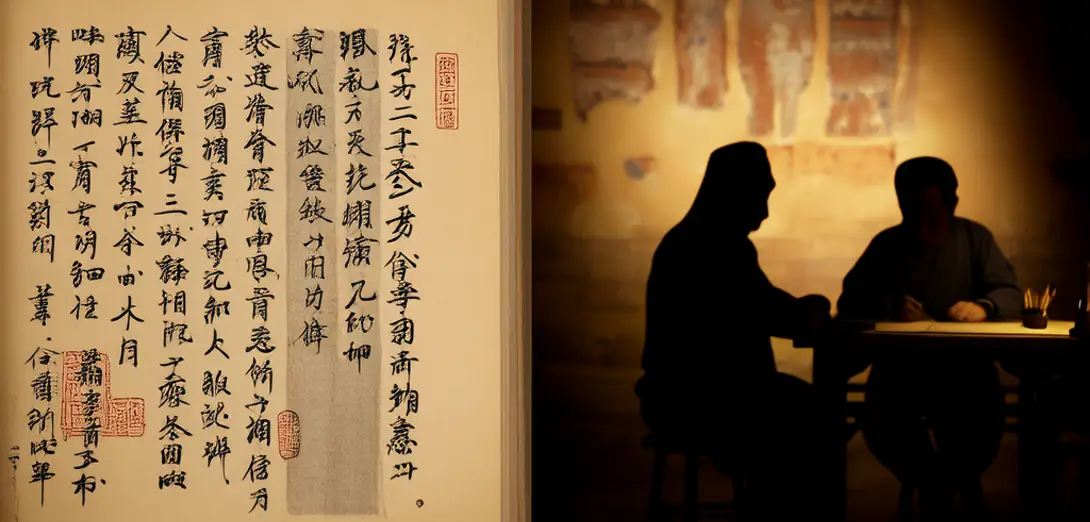
Silk Road Caravan Contracts as Multilingual Juridical Palimpsests
丝绸之路商队契约作为多语种法律性重写本
-
Ninth-century Dunhuang contracts show successive layers of ink where Sogdian, Tang legal Chinese, and early Uyghur script overwrite one another on the same parchment fragment.九世纪敦煌契约显示,同一张羊皮纸上叠写着粟特文、唐代法律汉语和早期回鹘文,墨迹层层相覆。
-
These were not translations but juridical palimpsests—each layer adding enforceable clauses without erasing prior obligations, creating stacked legal personhood.这些并非译本,而是司法重写本——每一层都增添可执行条款,却不抹去先前义务,从而形成叠加的法律人格。
-
A single clause governing camel mortality might appear in Sogdian (liability), Chinese (tax exemption), and Uyghur (grazing rights), each binding different parties under distinct customary law.一条关于骆驼死亡责任的条款,可能分别以粟特文(责任归属)、汉文(免税条款)和回鹘文(放牧权)写就,各自依据不同习惯法约束不同当事方。
-
The physical act of writing over previous text signaled consent to cumulative accountability rather than replacement or supersession.在旧文字上覆写新文这一行为本身,即表示同意累积追责,而非替代或废止原有约定。
-
Tax collectors along the Hexi Corridor accepted such documents precisely because their illegibility to any single authority prevented unilateral interpretation.河西走廊的税吏之所以接受此类文书,正因其对任何单一权威均难以识读,从而杜绝了单方面解释。
-
Modern forensic imaging reveals erased sections containing oaths sworn on Zoroastrian fire altars and Buddhist stupas—ritual anchors for contractual integrity.现代法医成像技术揭示出被擦除部分,内含在琐罗亚斯德教火坛与佛塔前起誓的誓词——这些仪式成为契约可信度的锚点。
-
Unlike Roman or Islamic contract traditions emphasizing singular authorship, Silk Road agreements assumed polycentric enforcement across jurisdictions.与强调单一作者性的罗马或伊斯兰契约传统不同,丝绸之路契约默认跨辖区的多中心执行机制。
-
Contemporary Central Asian arbitration courts cite these palimpsests when adjudicating transboundary water-sharing disputes involving multiple ethnic stakeholders.当今中亚仲裁法院在裁决涉及多个民族利益方的跨境水资源分配争端时,仍援引此类重写本。
-
The parchment itself became a jurisdictional territory—its surface hosting competing sovereignties without requiring hierarchical resolution.羊皮纸本身即成为一种管辖 territory——其表面容纳多重主权并存,无需层级式裁决。
-
Such documents challenge Western assumptions that legal clarity requires terminological consistency or syntactic uniformity.此类文书挑战了西方将法律明晰性等同于术语一致或句法统一的固有预设。
-
They demonstrate how multilingual opacity functioned as governance technology, not communication failure.它们表明,多语模糊性实为一种治理技术,而非沟通失败。
-
The contract thus remains legible not as text but as stratigraphic evidence of cooperative legal imagination.因此,这份契约的可读性不在于文本本身,而在于其作为合作式法律想象力之层积证据的考古学价值。