正在确认阅读权限…
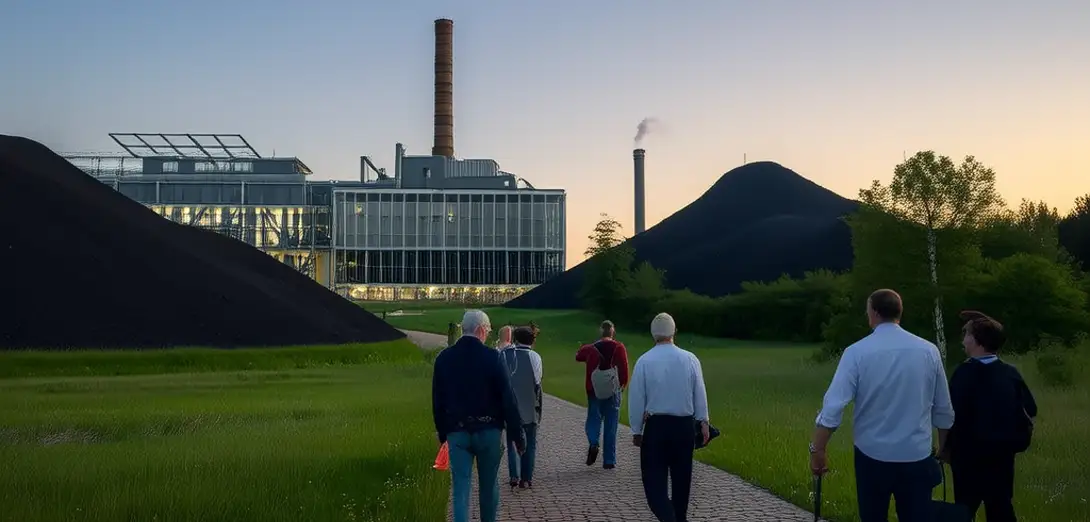
The Ruhr Valley Transformation: From Industrial Metabolism to Post-Extractive Landscape
鲁尔区转型:从工业代谢到后开采景观
-
The Ruhr Valley’s shift from coal and steel production to a knowledge economy involved not just factory closures, but the deliberate re-engineering of industrial metabolism—treating slag heaps as geothermal reservoirs and blast furnaces as cultural infrastructure.鲁尔谷地从煤炭钢铁生产向知识经济转型,不仅关闭了工厂,更刻意重构了工业代谢系统——将矿渣堆改造成地热储层,高炉转变为文化基础设施。
-
Zollverein Coal Mine Complex—decommissioned in 1986—now houses a UNESCO World Heritage–accredited design academy whose curriculum integrates brownfield remediation science with spatial theory.1986年停运的关税同盟煤矿工业区,如今是联合国教科文组织认证的设计学院所在地,其课程融合棕地修复科学与空间理论。
-
Former coking plants host biogas facilities that convert organic waste from neighboring cities into grid-compatible methane, linking post-industrial landscapes to circular urban metabolism.昔日焦化厂现为生物燃气设施,将邻近城市的有机废弃物转化为并网甲烷,使后工业景观融入城市循环代谢体系。
-
The Emscher River restoration project rerouted 320 kilometers of sewage-contaminated channels into daylighted, ecologically functional waterways—using engineered wetlands instead of concrete conduits.埃姆舍河修复工程将320公里受污水污染的暗渠重新引至地表,建成生态功能健全的河道,以人工湿地替代混凝土渠槽。
-
Slag heaps were capped with engineered soils and planted with pioneer species selected for metal phytostabilization, transforming toxic landforms into hiking trails with panoramic views of repurposed infrastructure.矿渣堆经工程覆土并种植具有金属植物稳定功能的先锋物种,蜕变为可远眺再利用基础设施的徒步步道。
-
The IBA Emscher Park initiative mandated that 30 percent of all public investment in former industrial zones fund ecological restoration—not as decoration, but as foundational infrastructure.埃姆舍公园国际建筑展(IBA)规定:所有投向前工业区的公共资金中,30%必须用于生态修复——并非装饰性工程,而是基础性基础设施。
-
Steel mill cranes now serve as mounting frames for solar arrays generating 14 MW annually, their structural integrity repurposed rather than demolished.钢铁厂起重机如今成为太阳能阵列的安装支架,年发电14兆瓦,其结构强度被再利用而非拆除。
-
Regional transport policy prioritizes rail freight for recycled construction materials, shortening supply chains for deconstruction projects across North Rhine-Westphalia.区域交通政策优先采用铁路运输再生建材,缩短北莱茵-威斯特法伦州各类拆除项目的供应链。
-
Community land trusts manage over 1,200 hectares of former industrial land, leasing parcels to urban farms, renewable energy cooperatives, and maker spaces under long-term, inflation-adjusted agreements.社区土地信托管理着逾1200公顷前工业用地,以长期、通胀挂钩协议方式,将地块出租给都市农场、可再生能源合作社及创客空间。
-
The Ruhr’s ‘Landscape Park’ concept treats post-industrial terrain not as blight to erase, but as palimpsest to reinterpret—where rust becomes habitat and conveyor belts become bike paths.鲁尔‘景观公园’理念不将后工业地形视为亟待抹除的衰败,而视作有待重释的羊皮纸——锈迹化为生境,传送带变为自行车道。
-
Its success stems from rejecting ‘green gentrification’: housing policies strictly cap rent increases in revitalized zones to prevent displacement of long-term residents.其成功源于拒绝‘绿色绅士化’:住房政策严格限制振兴区域租金涨幅,防止原住民被迫迁离。
-
This is not nostalgia for industry, nor denial of loss—it is metabolically literate placemaking, turning extraction’s residues into generative substrates.这既非对工业的怀旧,亦非对消逝的否认;而是具备代谢素养的场所营造——将开采遗留物转化为新生基质。