正在确认阅读权限…
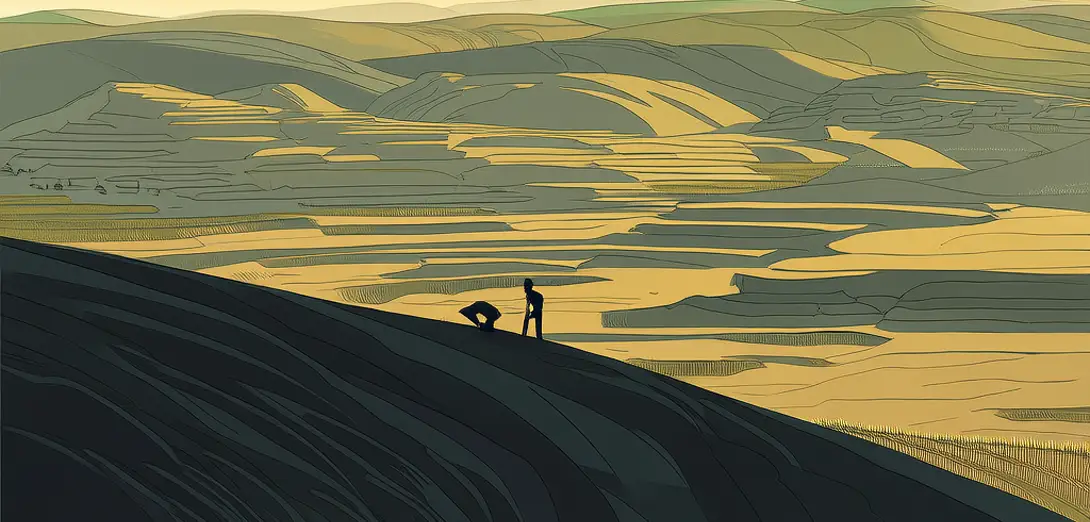
The Loess Plateau Reclamation: Terraced Memory and Agrarian Temporality in Northwest China
黄土高原生态重建:梯田记忆与西北农耕的时间性
-
For over two millennia, terracing has structured human time across the Loess Plateau’s fragile slopes.两千多年来,梯田塑造了黄土高原脆弱坡地上的人类时间。
-
Modern reforestation campaigns repurpose ancient soil-conservation logic amid accelerating climate volatility.现代植树造林运动在气候波动加剧的背景下,重新运用古老的水土保持逻辑。
-
Villagers negotiate between state-mandated vegetation targets and ancestral land-use rhythms rooted in millet cycles.村民在国家规定的植被覆盖率目标与根植于粟作周期的祖传土地利用节奏之间寻求平衡。
-
Satellite imagery reveals how restored loess landscapes now absorb monsoon runoff more effectively than in the 1980s.卫星影像显示,修复后的黄土景观比上世纪80年代更能有效吸收季风径流。
-
Yet hydrological recovery remains uneven—some catchments still lose sediment faster than roots can stabilize them.然而水文恢复并不均衡——部分流域流失泥沙的速度仍快于根系固土的速度。
-
Local cooperatives reinterpret ecological quotas as intergenerational contracts rather than technical benchmarks.当地合作社将生态指标重新诠释为代际契约,而非单纯的技术标准。
-
School curricula integrate terrace mapping with oral histories of drought-induced migration from the 1920s.学校课程将梯田测绘与20世纪20年代旱灾引发迁徙的口述史相结合。
-
Water-harvesting cisterns, once family-scale infrastructure, now anchor community-led climate adaptation plans.曾属家庭规模的雨水收集水窖,如今成为社区主导气候适应计划的核心设施。
-
Urban migrants returning during Qingming Festival often replant native shrubs on ancestral plots as ritualized restitution.清明节返乡的城市移民常在祖辈耕地上重植乡土灌木,作为仪式化的补偿。
-
This is not restoration to a prior state but co-evolution of agrarian practice, policy metrics, and geomorphic patience.这并非回归往昔状态,而是农耕实践、政策指标与地貌耐心的共同演化。
-
Geographers increasingly treat the plateau not as degraded land awaiting correction but as a palimpsest of layered temporalities.地理学者日益将高原视作多重时间层叠的‘重写本’,而非亟待修复的退化土地。
-
Its terraces hold sediment—and memory—in equal measure.它的梯田既存留泥沙,也承载记忆。