正在确认阅读权限…
The Ganges Riverfront Revitalization: Ritual Practice and Urban Hydrology in Dialogue
恒河滨水复兴:仪式实践与城市水文的对话
-
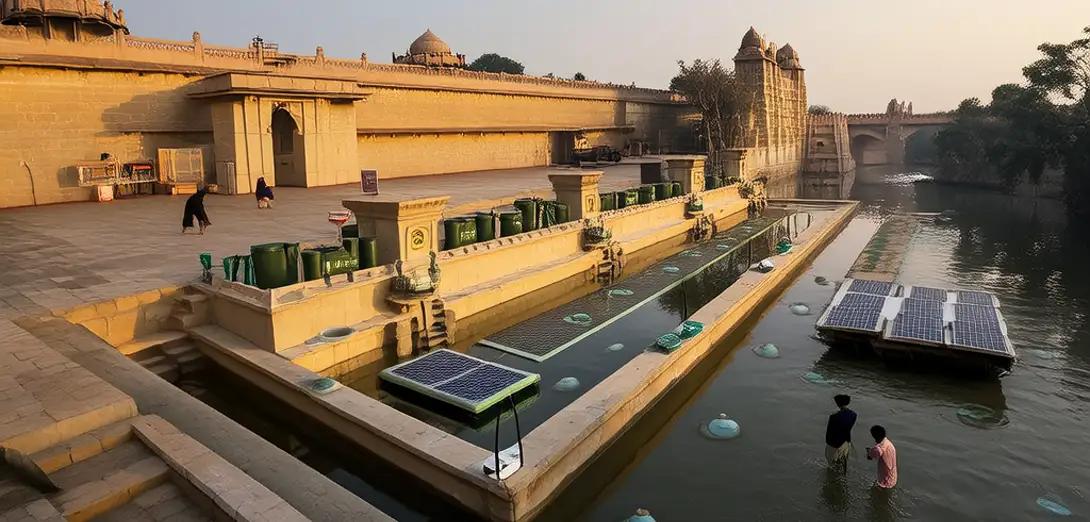
Varanasi’s Ganga Action Plan—now rebranded as Namami Gange—has shifted from engineering-centric sewage interception to integrating ritual bathing ghats as functional nodes in a distributed wastewater treatment network.瓦拉纳西的恒河行动规划——现更名为‘致敬恒河’——已从以工程为主的污水截流,转向将仪式沐浴台阶融入分布式污水处理网络,使其成为功能性节点。
-
New ghats incorporate submerged biofilm reactors beneath stone steps, treating bathwater runoff before it re-enters the river—blending sacramental practice with microbial ecology.新建台阶下方嵌入浸没式生物膜反应器,处理沐浴后径流水再排入河流,将宗教仪式与微生物生态融为一体。
-
Temple trusts now manage constructed wetlands adjacent to cremation grounds, using vetiver grass beds to absorb ash-borne heavy metals before infiltration into aquifers.寺庙信托机构如今在火葬场旁管理人工湿地,利用香根草床吸附灰烬中的重金属,防止其渗入含水层。
-
Real-time water quality dashboards displayed at major ghats show fecal coliform counts alongside Sanskrit shlokas explaining purification concepts—bridging scientific metrics and cultural epistemologies.主要台阶处实时水质信息屏同时显示粪大肠菌群数与阐释净化理念的梵语偈颂,弥合科学指标与文化认知体系。
-
The 2022 Ganga River Basin Authority ordinance mandates that all new residential developments within 500 meters of the river install rainwater harvesting linked to community filtration kiosks, not individual cisterns.2022年《恒河流域管理局条例》规定:凡距河岸500米内新建住宅,须安装雨水收集系统,并接入社区过滤亭,而非单户蓄水池。
-
Boat operators’ cooperatives were trained in dissolved oxygen sampling, transforming traditional ferry workers into citizen hydrologists whose daily logs inform municipal decision-making.船工合作社接受溶解氧采样培训,使传统摆渡人转型为公民水文学家,其日常记录为市政决策提供依据。
-
Cremation pyres now use certified low-smoke wood sourced from afforested riverbanks—reducing particulate emissions while restoring riparian vegetation lost to decades of fuelwood harvesting.火葬柴堆现采用经认证的低烟木材,原料来自河岸再造林区——既减少颗粒物排放,又修复因长期砍伐薪柴而退化的河岸植被。
-
Digital mapping of ghats includes layers showing groundwater vulnerability, flood frequency, and pilgrimage footfall density—enabling planners to prioritize interventions where cultural and hydrological stakes converge.台阶数字地图叠加地下水脆弱性、洪水频次及朝圣人流密度图层,助力规划者在文化价值与水文风险交汇处优先干预。
-
The Kashi Vishwanath Corridor project relocated informal settlements not just for heritage aesthetics, but to create permeable buffer zones that slow stormwater runoff during monsoon surges.卡西维什瓦纳特走廊项目迁移非正规聚居区,不仅为提升遗产景观,更旨在构建透水缓冲带,减缓季风暴雨期间的地表径流。
-
Religious festivals like Chhath Puja now feature coordinated effluent controls: devotees receive biodegradable offerings, and immersion timing is staggered using hydrodynamic models to prevent localized DO crashes.恰特节等宗教庆典现已实施协同排污管控:信众获发可降解供品,并依水动力模型错峰浸祭,避免局部溶解氧骤降。
-
This is not ‘greenwashing’ tradition—it is co-evolution: ancient practices adapting material form to sustain their own ritual viability amid anthropogenic hydrological change.这并非对传统的‘漂绿’,而是协同演化——古老实践在人类活动引发的水文变迁中,通过物质形态调适,维系自身仪式存续力。
-
The riverfront is no longer conceived as sacred space versus working infrastructure, but as a hybrid regime where theology and turbidity share the same governance table.河岸空间不再被视作神圣场所与实用基础设施的二元对立,而成为神学与浊度共治的混合治理场域。