正在确认阅读权限…
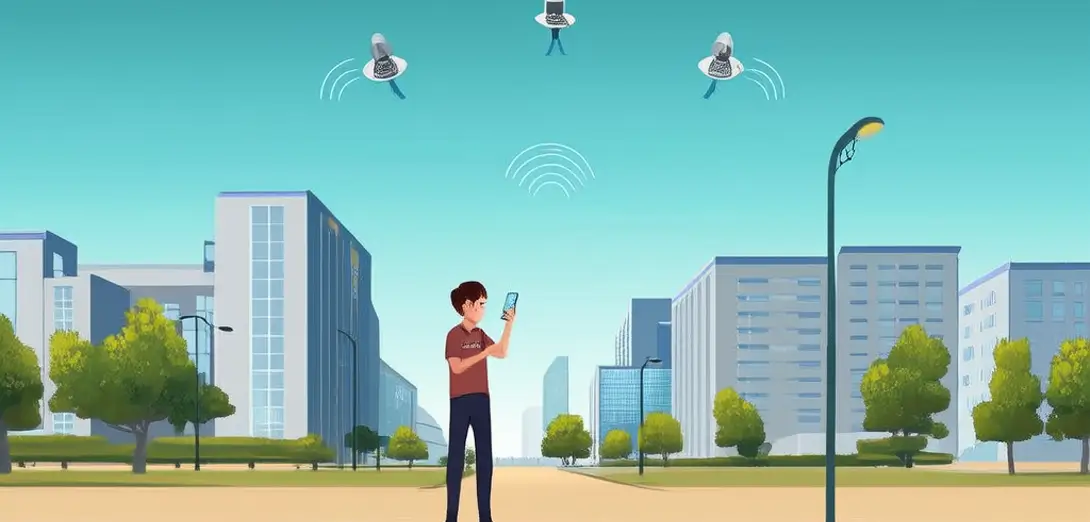
How GPS Knows Your Exact Location
GPS如何确定你的精确位置
-
GPS receivers calculate position by measuring signal travel time from at least four orbiting satellites simultaneously.GPS接收器通过同时测量至少四颗在轨卫星的信号传播时间来计算位置。
-
Each satellite transmits timestamps synchronized with atomic clocks aboard the spacecraft themselves.每颗卫星都发送与自身搭载的原子钟同步的时间戳。
-
Because radio signals move at known speed—nearly 300,000 km per second—distance equals time multiplied by speed.由于无线电波以已知速度传播(约每秒30万公里),距离等于时间乘以速度。
-
Trilateration uses distances from multiple satellites to pinpoint latitude, longitude, and altitude uniquely.三边测量法利用多颗卫星的距离数据,唯一确定纬度、经度和海拔高度。
-
Signal delays caused by ionosphere interference are corrected using dual-frequency receivers on modern devices.现代设备采用双频接收器,校正电离层干扰引起的信号延迟。
-
Assisted GPS (A-GPS) downloads orbital data via cellular networks to speed up first-time location locks.辅助GPS(A-GPS)通过蜂窝网络下载轨道数据,加快首次定位速度。
-
Urban canyons weaken signals, but sensor fusion combines GPS with accelerometers and gyroscopes for smoother tracking.城市峡谷会削弱信号,但传感器融合技术将GPS与加速度计和陀螺仪结合,实现更平滑的跟踪。
-
Galileo and GLONASS systems now supplement GPS, improving global coverage and redundancy for critical applications.伽利略系统和格洛纳斯系统如今作为GPS的补充,提升了全球覆盖范围和关键应用的冗余性。
-
Accuracy ranges from 3–5 meters for phones to under 1 cm for survey-grade equipment using ground correction.定位精度从手机的3–5米提升至测绘级设备使用地面校正后的1厘米以内。
-
Behind every map pin lies precise physics, orbital mechanics, and decades of international engineering collaboration.每个地图标记背后,都凝聚着精密物理、轨道力学及数十年国际工程协作成果。