正在确认阅读权限…
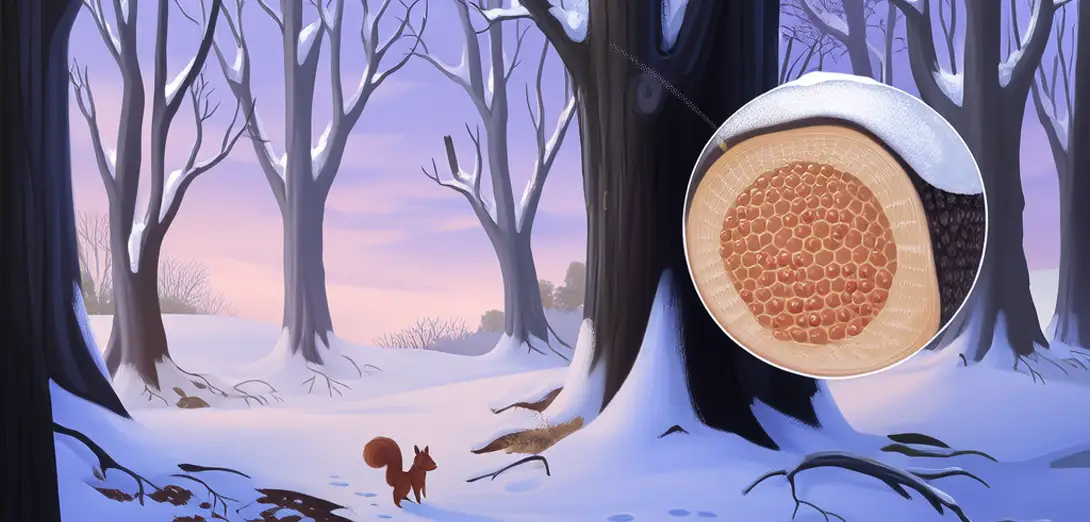
How Do Trees Survive Winter Without Freezing Solid?
树木如何在寒冬中避免被冻成冰棍?
-
Trees avoid freezing damage by converting starches into sugars, lowering the freezing point of sap like antifreeze.树木通过将淀粉转化为糖来避免冻害,降低树液冰点,起到类似防冻剂的作用。
-
Cell walls thicken and become more flexible, preventing ice crystals from puncturing membranes.细胞壁增厚并更具弹性,防止冰晶刺破细胞膜。
-
Water moves out of living cells into intercellular spaces, where freezing causes less harm.水分从活细胞移出至细胞间隙,在此处结冰造成的伤害较小。
-
Deciduous trees shed leaves to reduce water loss and stop photosynthesis until spring returns.落叶树通过脱落叶片减少水分流失,并暂停光合作用,直至春天回归。
-
Evergreens retain needles coated in waxy cuticles that slow evaporation and resist cold drying winds.常绿树保留覆盖蜡质角质层的针叶,减缓蒸发,抵御寒冷干燥的风。
-
Some species produce special proteins that inhibit ice nucleation—stopping crystals from forming inside cells.某些树种产生特殊蛋白质,抑制冰核形成,阻止细胞内冰晶生成。
-
Bark insulates inner tissues, while dormant buds seal themselves with protective scales and resins.树皮隔热保护内部组织,休眠芽则以保护性鳞片和树脂自我封闭。
-
Roots stay active just below the frost line, absorbing limited water when soil isn’t fully frozen.根系在冻土层下方保持活性,土壤未完全冻结时吸收有限水分。
-
Maple trees concentrate sugar in early spring, enabling sap collection for syrup before full thaw.枫树在早春集中积累糖分,使融雪前即可采集树液制糖。
-
Climate change disrupts these adaptations, causing premature budding and increased winter injury risk.气候变化扰乱这些适应机制,导致提前萌芽及冬季损伤风险上升。