正在确认阅读权限…
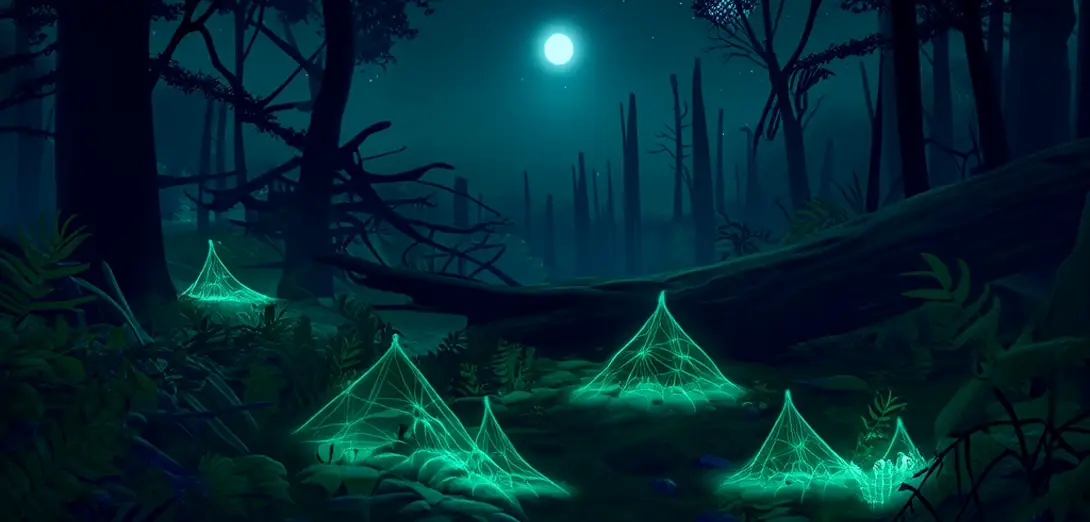
Why Do Certain Fungi Produce Bioluminescent Mycelium Only in Darkness?
为什么某些真菌仅在黑暗中产生发光菌丝?
-
Species like Neonothopanus gardneri emit soft green light from their mycelial networks exclusively at night.如加德纳夜光菌等物种仅在夜间通过菌丝网络发出柔和的绿光。
-
A luciferin-luciferase reaction powers this glow, but the enzyme only activates when light-sensitive proteins detect darkness.这种发光由荧光素-荧光素酶反应驱动,但该酶仅在感光蛋白检测到黑暗时才被激活。
-
Blue-light receptors suppress bioluminescence during daylight by blocking transcription of key luminescence genes.蓝光受体在白天通过抑制关键发光基因的转录来阻断生物发光。
-
This circadian regulation conserves energy and avoids attracting daytime predators like birds or insects.这种昼夜节律调控既节约能量,又避免吸引鸟类或昆虫等昼行性捕食者。
-
The glow attracts nocturnal arthropods that disperse spores while feeding on fungal tissue or secretions.发光可吸引夜行节肢动物,它们在取食真菌组织或分泌物时帮助传播孢子。
-
Researchers found that constant light exposure stops glowing within 48 hours—even if nutrients remain abundant.研究人员发现,持续光照48小时内发光即停止,即使营养依然充足。
-
Fungal bioluminescence differs from marine organisms because it requires oxygen, luciferin, and ATP all simultaneously.真菌生物发光与海洋生物不同,必须同时具备氧气、荧光素和ATP。
-
Its spectral peak at 490 nm matches the visual sensitivity of many night-active insects perfectly.其发光光谱峰值位于490纳米,恰好匹配多种夜行昆虫的视觉敏感范围。
-
Field studies show higher spore dispersal rates under moonless nights compared to full-moon conditions.野外研究表明,无月夜的孢子传播率高于满月夜。
-
This adaptation highlights how evolution fine-tunes biological light emission for ecological timing and function.这一适应性凸显了进化如何精准调控生物发光,以契合生态时间与功能需求。