正在确认阅读权限…
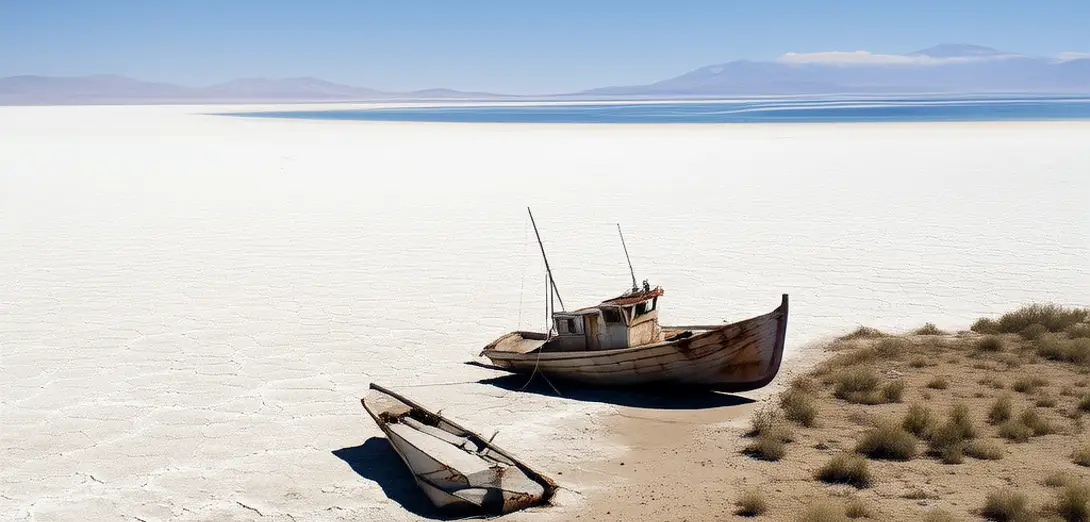
The Aral Sea: A Human-Made Environmental Crisis
咸海:人为造成的环境危机
-
Once the world’s fourth-largest lake, the Aral Sea shrank by 90% after Soviet irrigation diversions.曾为世界第四大湖的咸海,因苏联时期灌溉引水而萎缩了90%。
-
Cotton farming in Uzbekistan and Kazakhstan consumed almost all inflow from the Amu Darya and Syr Darya rivers.乌兹别克斯坦和哈萨克斯坦的棉花种植几乎耗尽了阿姆河与锡尔河的全部入水量。
-
Exposed seabed released toxic dust containing pesticides and salt, worsening respiratory illness.裸露的湖床释放含农药和盐分的有毒粉尘,加剧呼吸道疾病。
-
Fisheries collapsed, leaving former port towns like Moynaq stranded 100 km from water.渔业崩溃,昔日港口城镇如穆伊纳克如今距水面达100公里。
-
The North Aral Sea partially recovered after Kazakhstan built a dam and restored flows.哈萨克斯坦修建水坝并恢复水流后,北咸海部分恢复。
-
South Aral Sea remains largely dry, though small wetlands support migratory birds in spring.南咸海仍基本干涸,但春季小型湿地可为候鸟提供栖息地。
-
Remote sensing shows new shrubs colonizing former lakebeds, stabilizing some soils.遥感显示新灌木正侵入昔日湖床,稳定部分土壤。
-
Farmers now test drip irrigation and salt-tolerant cotton varieties to reduce water demand.农民正试验滴灌技术和耐盐棉花品种以降低用水需求。
-
UN-backed education programs teach children about watershed stewardship and historical ecology.联合国支持的教育项目向儿童传授流域保护与历史生态知识。
-
Regional water-sharing treaties remain fragile amid growing competition for dwindling supplies.在水资源日益紧缺、竞争加剧背景下,区域水权分配条约依然脆弱。