正在确认阅读权限…
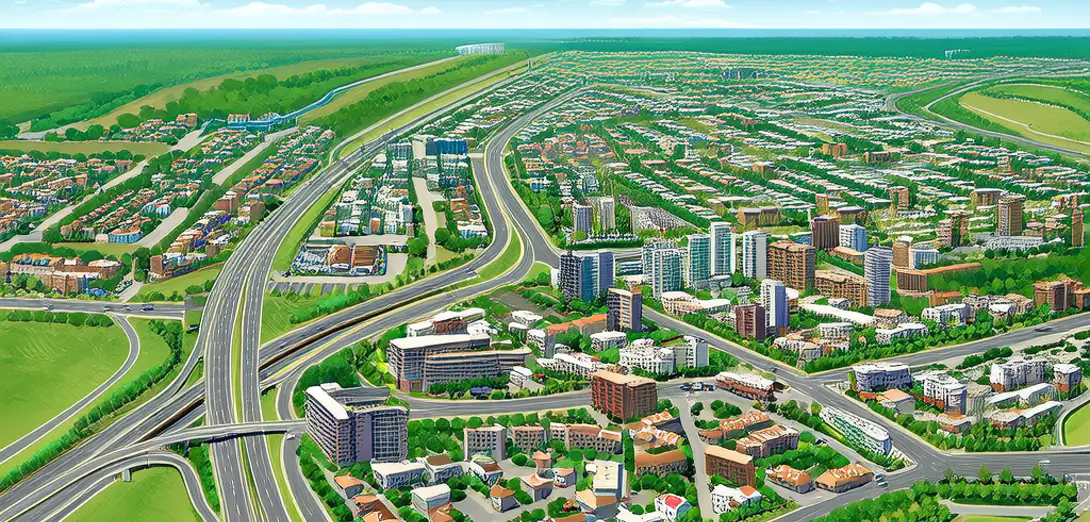
Cities Grow Like Living Organisms: Patterns of Urban Expansion
城市如生命体生长:城市扩张的模式
-
Cities rarely grow in perfect circles; instead, they spread along transportation corridors like highways and railways.城市很少呈完美的圆形扩张,而往往沿着高速公路、铁路等交通走廊延伸。
-
Older neighborhoods often cluster around historic centers, while newer suburbs develop farther out with lower density.老城区通常围绕历史中心聚集,而新建郊区则向外扩展,人口密度较低。
-
Gentrification transforms industrial waterfronts or inner-city districts into high-rent residential areas.士绅化将工业滨水区或市中心区域改造为高租金住宅区。
-
Megacities like Tokyo and Lagos expand rapidly due to both natural population growth and rural migration.东京、拉各斯等特大城市因自然人口增长和农村人口迁入而迅速扩张。
-
Urban sprawl consumes farmland and increases car dependence, raising emissions and infrastructure costs.城市无序蔓延吞噬农田,加剧汽车依赖,推高碳排放和基础设施成本。
-
Some cities now adopt compact development policies to protect green belts and improve public transit access.一些城市现推行紧凑开发政策,以保护绿带并提升公共交通可达性。
-
Informal settlements—often called favelas or kampungs—arise where housing demand outpaces planning capacity.当住房需求超出规划能力时,便会出现贫民窟或甘榜等非正规住区。
-
Smart growth strategies encourage mixed-use zoning so people can live, work, and shop within walking distance.精明增长策略倡导混合用地规划,使居民能在步行范围内生活、工作和购物。
-
Satellite images clearly show how cities change shape over decades, revealing economic and policy shifts.卫星图像清晰显示城市数十年间形态变化,折射出经济与政策变迁。
-
Studying urban form helps planners design healthier, fairer, and more resilient cities for everyone.研究城市形态有助于规划者建设更健康、更公平、更具韧性的城市。