正在确认阅读权限…
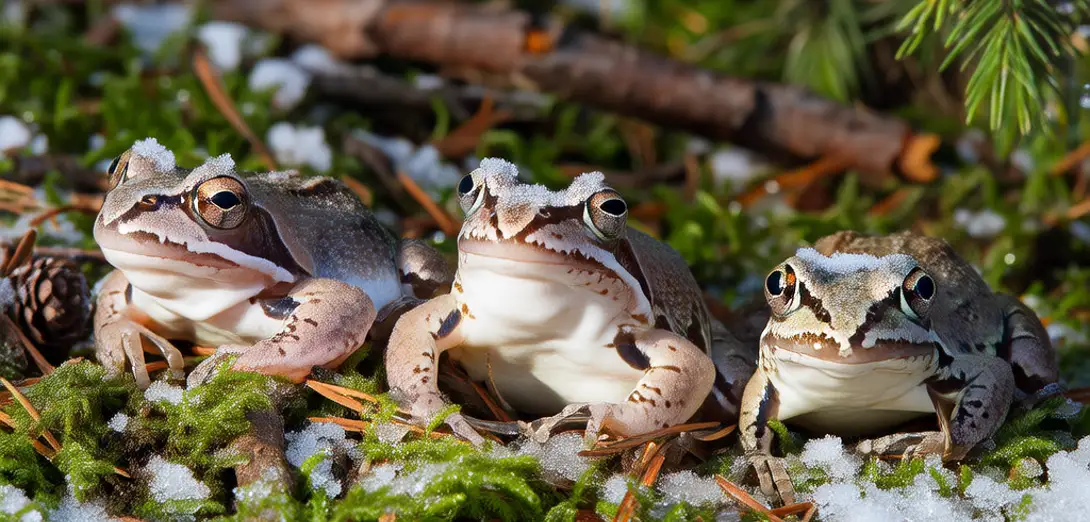
Why Some Frogs Can Freeze Solid—and Thaw Unharmed in Spring
为何某些青蛙能完全冻结又在春季无损复苏
-
Wood frogs in Alaska and Canada survive winter by freezing up to 70% of their body water into ice.阿拉斯加和加拿大的木蛙能通过将体内高达70%的水分冻结成冰来度过寒冬。
-
Special glucose proteins act as natural antifreeze, protecting cells from ice-crystal damage during deep freeze.特殊的葡萄糖蛋白充当天然抗冻剂,保护细胞在深度冷冻中免受冰晶损伤。
-
Their hearts stop beating, and breathing halts completely while frozen beneath leaf litter or soil.冻结状态下,它们的心脏停止跳动,呼吸完全暂停,藏身于落叶层或土壤之下。
-
Scientists discovered that liver cells rapidly produce cryoprotectants when temperatures drop below zero degrees Celsius.科学家发现,当温度降至零摄氏度以下时,肝脏细胞会迅速生成抗冻保护剂。
-
This adaptation lets frogs endure weeks below −4°C without tissue necrosis or organ failure.这一适应机制使青蛙能在零下4摄氏度以下存活数周,而不会发生组织坏死或器官衰竭。
-
When spring arrives, thawing begins from the core outward, restoring circulation within hours.春季来临时,解冻从身体核心开始向外扩散,数小时内即可恢复血液循环。
-
Biomedical researchers study these frogs to improve human organ preservation for transplants.生物医学研究人员研究这些青蛙,以改进人类移植器官的保存技术。
-
Unlike mammals, frog cells tolerate dehydration and metabolic shutdown without triggering apoptosis.与哺乳动物不同,蛙类细胞能耐受脱水和代谢停滞,且不触发细胞凋亡。
-
Field biologists track survival rates using radio-frequency tags implanted before hibernation.野外生物学家在冬眠前植入射频标签,追踪其存活率。
-
Understanding this process helps design better cryostorage methods for vaccines and biological samples.理解这一过程有助于设计更优的疫苗及生物样本低温储存方法。