正在确认阅读权限…
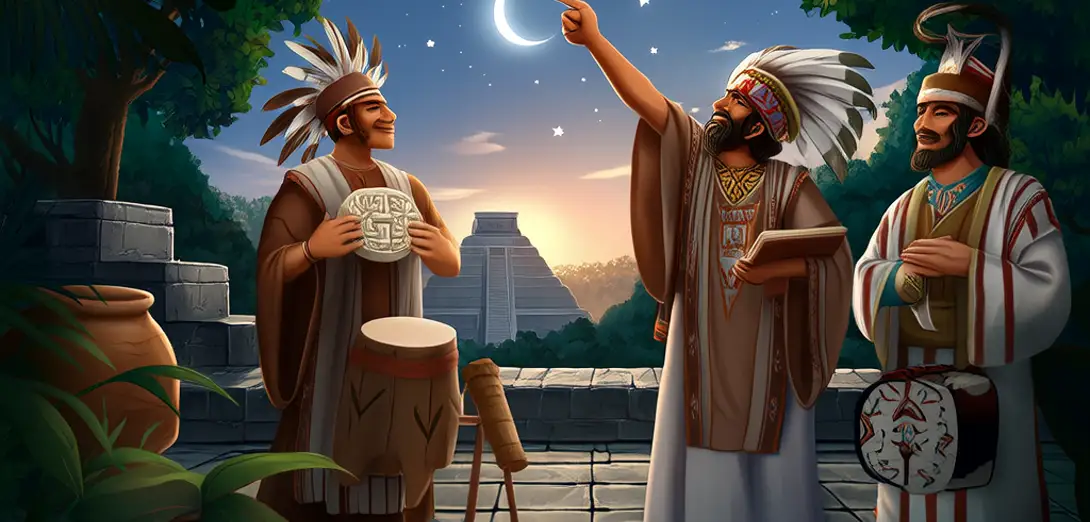
Priests Kept Calendars in Mesoamerican Cities
中美洲城市中的祭司维护历法
精读先不看文字,完整听一遍。
-
Maya and Aztec priests studied stars, moons, and seasons closely.玛雅和阿兹特克祭司密切观测星辰、月亮与季节。
-
They made two calendars: one for farming and one for rituals.他们制定了两套历法:一套用于农事,一套用于宗教仪式。
-
The sacred calendar had two hundred sixty days divided into cycles.神圣历法共260天,分为若干周期。
-
Every fifty-two years, people feared the world might end.每52年,人们便担心世界可能终结。
-
Priests watched the sky to set planting and festival dates.祭司通过观天确定播种与节庆日期。
-
Accurate timekeeping helped unite large communities under common rites.精准的计时有助于将广大社群凝聚于共同的仪式之下。
-
Temples held observatories where priests tracked celestial movements.神庙内设有天文观测台,供祭司追踪天体运行。
-
Their calendars showed deep knowledge of math and nature.他们的历法体现了对数学与自然的深刻理解。
精读 · 大约 10 分钟
听 → 读 → 学表达 → 懂 → 今天会说这一句 → 跟读录音 → 自己说一句。
③ 学 · 重点表达
- Temples held observatories where priests tracked celestial movements. 神庙内设有天文观测台,供祭司追踪天体运行。
- Every fifty-two years, people feared the world might end. 每52年,人们便担心世界可能终结。
- Accurate timekeeping helped unite large communities under common rites. 精准的计时有助于将广大社群凝聚于共同的仪式之下。
④ 懂 · 选一选
⑤ 今天会说这一句
Temples held observatories where priests tracked celestial movements.
⑥ 跟读并录音
Temples held observatories where priests tracked celestial movements.
第一版:录下来、回听、再听标准音。系统打分以后再加。
⑦ 说 · 自己来一句
用今天的表达,自己说一句。
例子:Temples held observatories where priests tracked celestial movements.
已记下。连续天数以后会显示在课表里。
陈老师指导
课程开发中,敬请期待。成人和孩子都可以先自学听读、精读。
这边的讲解音轨还在做。想先跟着老师走完固定 30 课,可以去陈老师带读社(和自学通行不是同一份会员)。
课程开发中,敬请期待。