正在确认阅读权限…
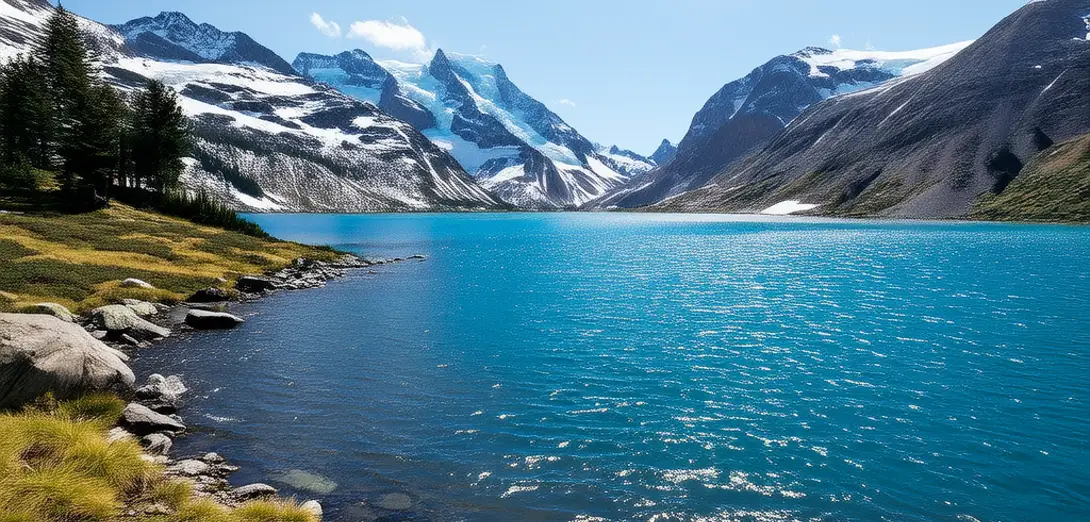
Why Mountain Lakes Often Appear Turquoise Due to Light Scattering by Glacial Flour
为何高山湖泊常呈青绿色——冰川粉导致的光散射现象
-
Mountain lakes shine with vivid turquoise because of fine rock particles called glacial flour.山地湖泊因一种名为“冰川粉”的细微岩石颗粒而呈现出鲜艳的翠绿色。
-
Glaciers grind bedrock into microscopic silt that stays suspended in meltwater lakes.冰川将基岩研磨成微米级淤泥,悬浮于融水湖中。
-
Sunlight entering the water scatters strongly off these tiny particles through Rayleigh scattering.阳光进入湖水后,经这些微小颗粒发生强烈的瑞利散射。
-
Shorter blue and green wavelengths dominate the reflected light we see from above.较短的蓝光和绿光波长主导了我们从上方所见的反射光。
-
Unlike algae blooms, this color appears only in recently glaciated, nutrient-poor basins.与藻华不同,这种颜色仅出现在近期受冰川作用、养分贫乏的湖盆中。
-
The effect intensifies on clear, sunny days when light penetration is deepest.晴朗无云的日子里,光线穿透最深,这种效应尤为显著。
-
Water depth and particle concentration jointly determine the exact shade of turquoise observed.水深与颗粒浓度共同决定了所观察到的翠绿色调。
-
Scientists use satellite imagery of this hue to monitor glacier retreat rates globally.科学家利用卫星影像捕捉这一色调,以全球监测冰川退缩速率。
-
No chemical dyes or pollutants cause this phenomenon—it’s purely physical optics in action.该现象并非由化学染料或污染物引起,纯粹是物理光学作用的结果。
-
Even after glaciers vanish, residual flour can tint lakes for decades under stable conditions.即使冰川消失,残留的冰川粉在稳定条件下仍可使湖泊保持数十年的着色。