正在确认阅读权限…
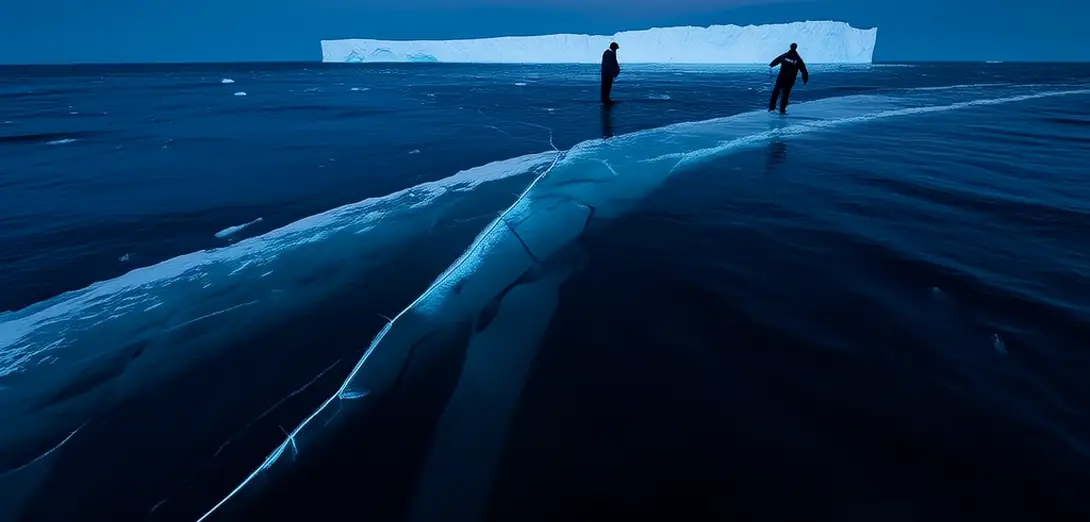
The Physics of Ice Shelf Calving: How Flexural Stress and Hydrofracture Interact at Glacial Margins
冰架崩解的物理学:弯曲应力与水力劈裂在冰川边缘的相互作用
-
Ice shelves resist inland glacier flow by transmitting buttressing stresses across their width—calving events compromise this mechanical restraint.冰架通过横向传递支撑应力来抑制内陆冰川流动,而崩解事件会削弱这种力学约束。
-
Flexural stress arises from differential flow velocities across the shelf, inducing tensile strain at the upper surface near grounding lines.弯曲应力源于冰架各处流速差异,导致接地线附近上表面产生拉伸应变。
-
Surface meltwater percolates into crevasses, increasing hydrostatic pressure that drives crack propagation downward—a process called hydrofracture.地表融水渗入裂缝,增大静水压力,促使裂纹向下扩展——这一过程称为水力压裂。
-
Once cracks penetrate below the waterline, ocean buoyancy further accelerates fracturing through enhanced bending moments.一旦裂纹延伸至海平面以下,海水浮力会通过增强弯曲力矩进一步加速断裂。
-
Satellite interferometry shows pre-calving deformation fields extend up to 15 km inland, indicating long-range stress redistribution.卫星干涉测量显示,崩解前的形变场可向内陆延伸达15公里,表明应力发生长距离再分布。
-
Numerical models now couple ice flow dynamics with fracture mechanics and ocean thermal forcing to simulate calving front evolution.数值模型现已将冰流动力学、断裂力学与海洋热强迫耦合,以模拟崩解前沿演化。
-
Antarctic Peninsula ice shelves lost 25% of total area between 1995–2020, with Larsen B collapse attributed primarily to sustained surface melting.1995–2020年间,南极半岛冰架总面积减少25%,其中拉森B冰架崩塌主要归因于持续的地表融化。
-
Marine-terminating glaciers accelerate post-calving not just from reduced resistance, but from altered basal traction due to changed ice geometry.海洋终止型冰川在崩解后加速,不仅因阻力减小,更因冰体几何形态改变导致基底牵引力变化。
-
Remote sensing identifies 'suture zones'—regions of structural heterogeneity—that either inhibit or channel fracture propagation unpredictably.遥感识别出‘缝合带’——即结构非均质区域——其对裂纹传播具有不可预测的抑制或导引作用。
-
Engineering analogues inform coastal infrastructure design: ice shelf fracture mechanics resemble composite laminate failure under cyclic loading.工程类比为海岸基础设施设计提供参考:冰架断裂机制类似于复合层板在循环载荷下的失效。
-
Policy-relevant thresholds focus on 'marine ice cliff instability', though observational evidence for its dominance remains contested.政策相关阈值聚焦于‘海洋冰崖失稳’,但其主导作用的观测证据仍存争议。
-
This process illustrates how atmospheric, oceanic, and glaciological systems interact nonlinearly to drive abrupt sea-level contributions.该过程揭示了大气、海洋与冰川系统如何非线性相互作用,驱动突发性海平面上升。