正在确认阅读权限…
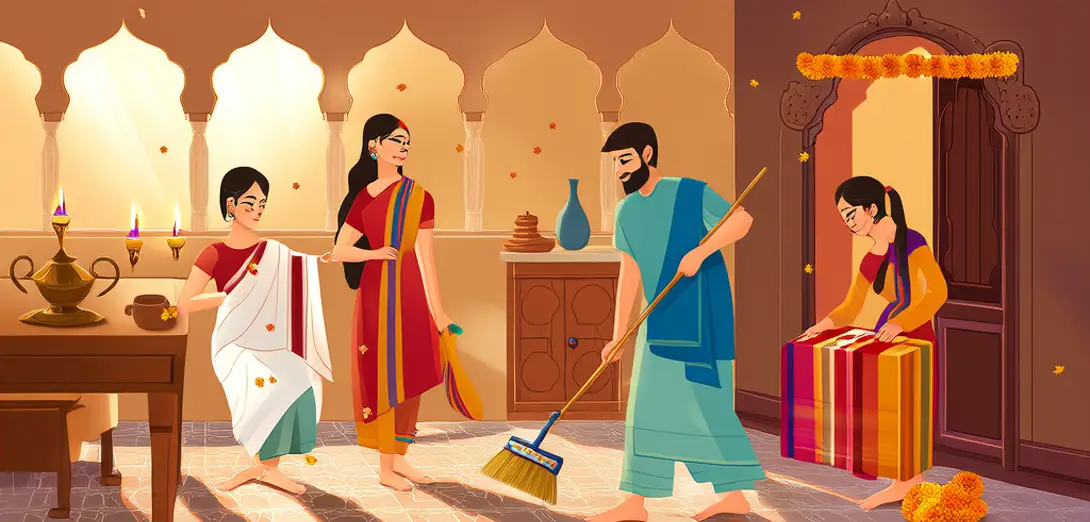
Festival Lights and Shared Joy in Diwali Celebrations
排灯节庆典中的灯火与共庆
-
Families clean homes thoroughly before Diwali to welcome Lakshmi, the goddess of prosperity and good fortune.节日前,家家户户彻底打扫房屋,迎接象征繁荣与好运的吉祥天女拉克什米。
-
Children help draw colorful rangoli patterns at doorways using rice flour, flower petals, or colored sand to guide blessings inside.孩子们用米粉、花瓣或彩沙在门口绘制五彩缤纷的 rangoli 图案,引福气进门。
-
Oil lamps called diyas glow along windowsills and balconies, symbolizing light overcoming darkness and knowledge defeating ignorance.名为 diyas 的油灯沿窗台和阳台点亮,象征光明战胜黑暗、知识驱散愚昧。
-
Neighbors exchange boxes of sweets like laddoos and barfi, often handmade, accompanied by hugs and cheerful 'Happy Diwali!' wishes.邻里互赠装有 ladoo 和 barfi 等甜点的礼盒——多为手工制作,并伴以拥抱和欢快的‘排灯节快乐!’祝福。
-
Fireworks light up the sky at night, but many families now choose eco-friendly alternatives to protect air quality and animals.夜晚烟花点亮天空,但许多家庭如今选择环保替代方案,以保护空气质量和动物。
-
Young people wear new clothes — usually bright silks or cotton — and receive gifts wrapped in shiny paper and ribbons.年轻人穿上新衣——通常是鲜亮的丝绸或棉布,并收到用闪亮纸张和丝带包裹的礼物。
-
Temples hold special prayers where priests chant Sanskrit mantras, and devotees offer flowers, incense, and sweets with folded hands.寺庙举行特别祈祷仪式,祭司吟诵梵语咒语,信徒双手合十,敬献鲜花、香和甜食。
-
At midnight, families gather for a small puja, lighting candles together while sharing hopes for health, harmony, and honest work ahead.午夜时分,家人齐聚举行小型 puja 仪式,共同点燃蜡烛,许下健康、和睦与勤勉工作的愿望。