正在确认阅读权限…
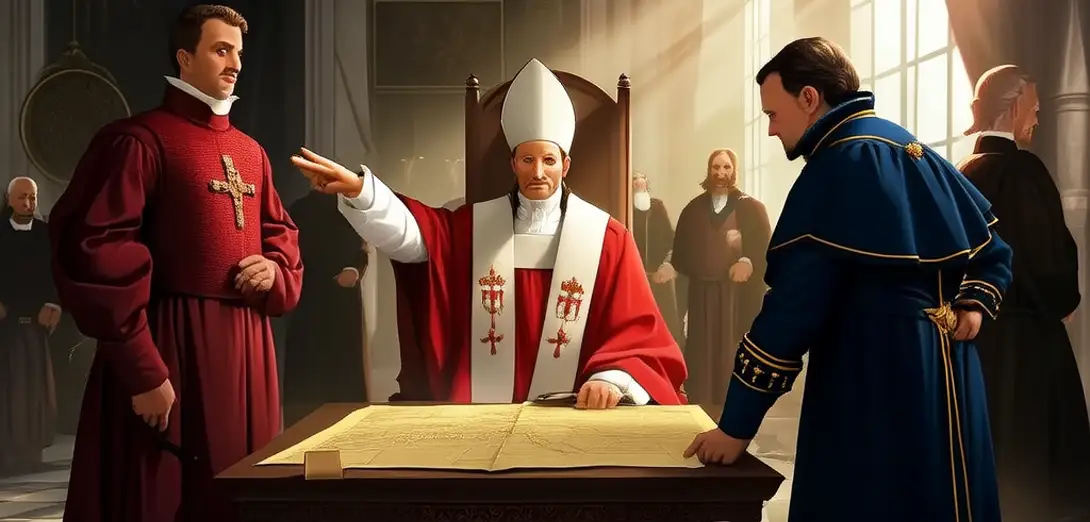
The Treaty of Tordesillas in 1494
1494年《托德西利亚斯条约》
-
After Columbus’s 1492 voyage, Spain and Portugal asked Pope Alexander VI to divide newly found lands outside Europe.哥伦布1492年航行后,西班牙与葡萄牙请求教皇亚历山大六世划分欧洲以外新发现的土地。
-
The 1493 papal line ran 100 leagues west of Cape Verde, favoring Spain—but Portugal protested.1493年教皇子午线定于佛得角群岛以西100里格,偏袒西班牙,但葡萄牙提出抗议。
-
In 1494, diplomats met in Tordesillas and moved the line to 370 leagues west, granting Brazil to Portugal.1494年,双方外交官在托尔德西里亚斯会晤,将分界线西移至佛得角群岛以西370里格,使巴西归属葡萄牙。
-
Neither side consulted Indigenous peoples, whose territories were drawn over without maps or consent.双方均未征询原住民意见,其领土被随意划入,既无地图依据,也无其同意。
-
The treaty reflected European confidence in claiming sovereignty by signature, not settlement or agreement.该条约体现欧洲人仅凭签署文件便自认拥有主权的自信,而非基于实际定居或协商一致。
-
It shaped colonial boundaries in the Americas for centuries, influencing languages, religions, and legal systems.它数百年间塑造了美洲殖民边界,深刻影响了语言、宗教与法律体系。
-
Other powers like England and France ignored it, claiming 'vacant land' justified their own expansion.英格兰、法国等其他列强无视该条约,以‘无主土地’为由推行自身扩张。
-
Still, it remains one of history’s earliest attempts to regulate global space through international law.尽管如此,它仍是历史上最早尝试通过国际法规范全球空间的协议之一。