正在确认阅读权限…
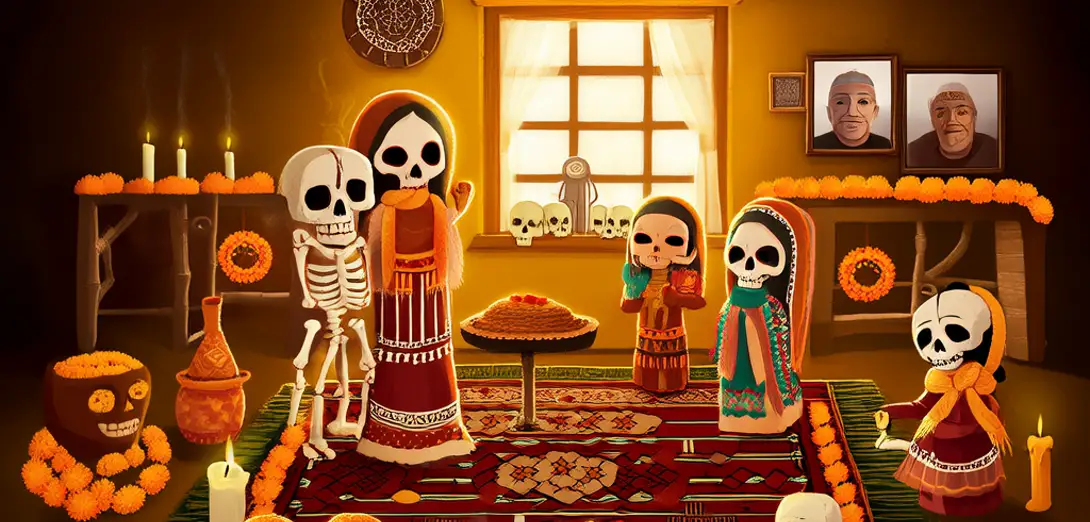
The Día de los Muertos Altars in Oaxacan Zapotec Villages
瓦哈卡萨波特克村庄的亡灵节祭坛
-
In Teotitlán del Valle, families construct altars inside homes using wool rugs dyed with cochineal insects.在特奥蒂特兰德尔瓦莱,家家户户用胭脂虫染色的羊毛地毯在屋内搭建祭坛。
-
Marigold petals form paths guiding ancestors from cemeteries through doorways and up staircases.万寿菊花瓣铺成小径,引导祖先从墓地穿过门扉、拾级而上。
-
Each offering includes a small clay cup of pulque, a corn-based drink brewed since pre-Hispanic times.每份供品都含一只小陶杯,盛着自前西班牙时代起便以玉米酿制的普尔克酒。
-
Grandmothers place carved wooden figures representing lineage founders beside photos taken in 1940s village squares.祖母将代表家族始祖的木雕人像,放在20世纪40年代拍摄于村中广场的老照片旁。
-
Altars never include clocks or mirrors, as time and reflection belong only to the living world.祭坛上从不摆放钟表或镜子,因时间与映照只属于生者的世界。
-
Children help arrange sugar skulls inscribed with names—not of the dead, but of those who taught them crafts.孩子们帮忙摆放糖制骷髅,上面刻着名字——不是逝者,而是传授他们手艺的人。
-
Priests of the old earth cult join Catholic priests in blessing copal resin smoke rising from clay burners.古老地神教祭司与天主教神父一同为陶制香炉中升腾的柯巴脂烟雾祈福。
-
Local weavers add new stripes to their rugs each year, matching colors to specific ancestors’ stories.本地织工每年都在地毯上添一道新条纹,颜色对应特定祖先的故事。
-
At midnight, families walk barefoot to the cemetery carrying bread shaped like bones and butterflies.午夜时分,家人赤足前往墓地,手捧骨形与蝶形面包。
-
The scent of baked pan de muerto mingles with damp soil where roots of ancient ceiba trees hold memory.烤制亡灵面包的香气,与古吉贝树根须盘踞的湿润泥土气息交织,而那泥土里蕴藏着记忆。