正在确认阅读权限…
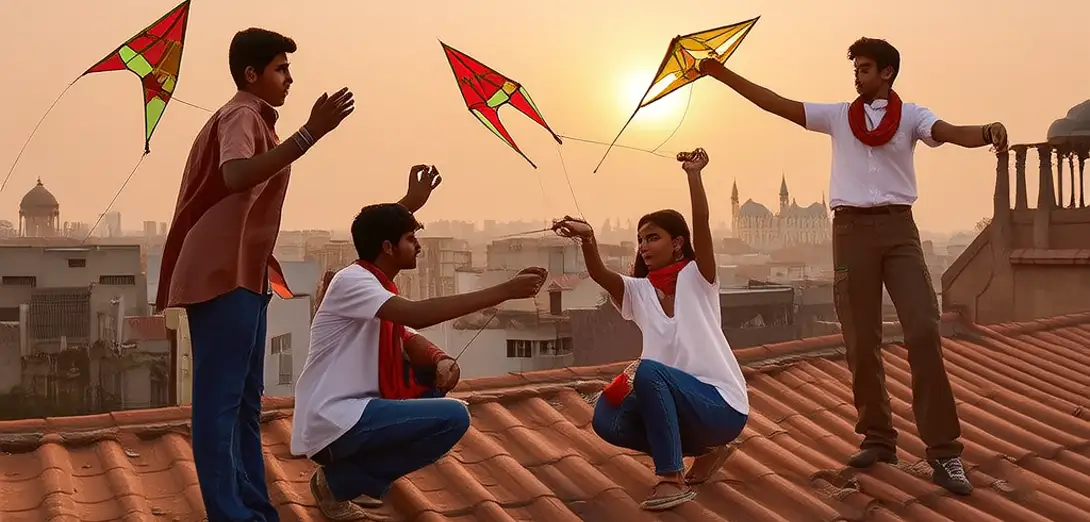
The Sankranti Kite Festival of Ahmedabad: Sky Geometry and Gujarat’s Agrarian Calendar
艾哈迈达巴德洒红节风筝盛会:天空几何学与古吉拉特农耕历法
-
On Makar Sankranti, Ahmedabad’s rooftops become crowded arenas where kite-flying follows strict unwritten spatial rules.马卡尔桑克兰蒂节期间,艾哈迈达巴德的屋顶变成拥挤的竞技场,放风筝遵循着不成文的空间规则。
-
Families dye silk threads with turmeric or glass powder to cut rivals’ lines—a skill passed down through generations of textile workers.家家户户用姜黄或玻璃粉染丝线,以割断对手的风筝线——这门技艺由几代纺织工人传承下来。
-
Each neighborhood flies kites shaped like peacocks, mangoes, or geometric mandalas reflecting local harvest symbols.每个社区放飞的风筝形如孔雀、芒果或几何曼陀罗,映射当地丰收象征。
-
The festival marks the sun’s northward turn, ending winter sowing and beginning sugarcane harvesting across Gujarat.该节日标志太阳北移,结束古吉拉特邦的冬播,开启甘蔗收获。
-
Street vendors sell sesame sweets wrapped in banana leaves, linking taste, season, and soil fertility beliefs.街头小贩售卖裹在芭蕉叶里的芝麻甜点,将滋味、季节与土壤肥力信仰联结起来。
-
Young women wear ghagra cholis embroidered with mirror-work patterns mimicking kite reflections at noon.年轻女子身着镜面刺绣的格拉格拉-乔莉服饰,图案模仿正午时分风筝的反光。
-
Judges award prizes not just for height but for how long a kite stays within the city’s historic pol boundaries.评委不仅按高度评奖,还依据风筝在古城‘波尔’(pol)边界内停留时间长短打分。
-
Even smartphone apps now map optimal wind corridors—but elders still read cloud formations near Sabarmati River.如今连智能手机应用都可绘制最佳风道,但老人们仍凭萨巴尔马蒂河畔云象判断风势。
-
Schools close early so children can join rooftop competitions governed by neighborhood councils, not teachers.学校提早放学,让孩子们加入由邻里委员会而非教师主导的屋顶竞赛。
-
This sky-bound ritual has never been cancelled, not even during the 1947 Partition riots or 2001 earthquake.这场翱翔于天际的仪式从未中断,即便1947年印巴分治骚乱或2001年大地震亦未例外。