正在确认阅读权限…
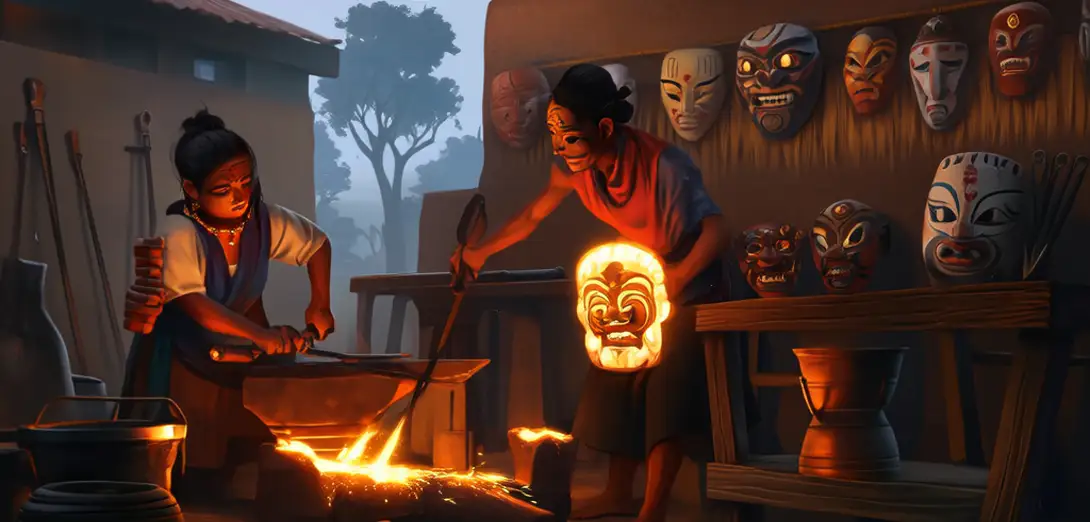
The Chhau Mask Rituals of Purulia: Steel Forging and Mythic Embodiment in West Bengal
普鲁利亚的乔舞面具仪式:西孟加拉邦的钢铁锻造与神话具身化
-
Mask-makers in Purulia heat iron rods until red-hot, then hammer gods’ faces into raw metal frames.普鲁利亚的面具匠人将铁条烧至通红,再锻打出神祇面容,嵌入粗粝的金属框架。
-
Each Chhau dancer spends months learning how to move *through* the mask—not beneath it.每位乔乌舞者需耗时数月,学习如何‘穿过’面具起舞,而非仅仅藏身其下。
-
During spring festivals, villagers watch warriors embody Shiva not through prayer but through spinning leaps and steel glint.春季节庆期间,村民不靠祈祷,而借旋转腾跃与寒光凛凛的钢刃,目睹武士化身湿婆。
-
The masks weigh over three kilograms and lack eye holes, so dancers navigate by sound and muscle memory.面具重逾三公斤,且无眼孔,舞者仅凭声音与肌肉记忆辨识方位。
-
Colonial records called Chhau ‘primitive theatre’, ignoring how its rhythms mirror local land disputes and monsoon cycles.殖民档案称乔乌为‘原始戏剧’,却无视其节奏实则映照当地土地纷争与季风周期。
-
Today, youth workshops teach mask-making alongside land-rights history, linking craft to collective sovereignty.如今青年工坊在传授面具制作的同时,亦讲授土地权益史,将工艺与集体主权相联。
-
A single mask may take forty days to complete, with each chisel mark representing a village ancestor’s testimony.单个面具常需四十日方成,每一凿痕皆承载一位村中先祖的证言。
-
When the drumbeat slows, dancers freeze mid-air—not as statues, but as thresholds between myth and justice.鼓点渐缓之际,舞者悬停半空——并非化作雕像,而是成为神话与正义之间的临界。
-
Foreign scholars once filmed Chhau as folklore; now Purulia hosts researchers who first apprentice with smiths.外国学者曾将乔乌摄录为民间传说;今普鲁利亚则迎来须先拜铁匠为师的研究者。
-
The final ritual burns old masks, not to destroy them, but to release stories back into the soil.最终仪式焚毁旧面具,并非为毁灭,而是将故事释还大地。