🔮 Weird Tales & Urban Legends
The Mirror on the Wall: A Legend That Haunts the Forgotten Hills
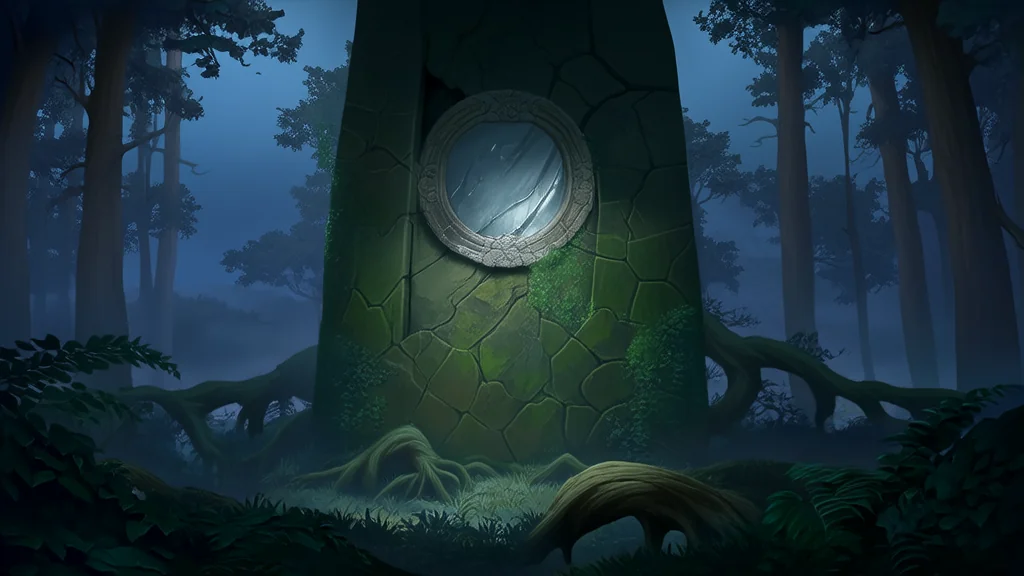
In a quiet town nestled between two forgotten hills, there was a legend that only the old folks spoke of in hushed tones. It was called "The Mirror on the Wall." No one knew exactly when it had started, but everyone seemed to know someone who had seen it—though no one could confirm if it was real or just a story meant to scare children.
The mirror was said to appear in the most unexpected places. A bathroom wall in an abandoned house, a window in a boarded-up shop, even the side of a highway rest area. The first time anyone saw it, they would see their own reflection—but not quite. The image would be slightly out of sync, as if the mirror was watching them instead of showing them. Some claimed they heard whispers from the glass, voices too soft to understand. Others said they felt a chill crawl up their spine, even in the middle of summer.
Lena had always been skeptical of such stories. She was a high school teacher with a sharp mind and a tendency to question everything. But when her cousin, Mia, told her about the mirror she had seen in a gas station restroom, Lena couldn't help but feel a flicker of curiosity.
It happened on a rainy Tuesday. Lena was driving home after a long day, the radio playing a soft jazz tune. She pulled into a gas station near the edge of town, hoping for coffee and a quick snack. The place was empty, save for a flickering fluorescent light overhead. She walked inside, the door creaking behind her.
The restroom was clean, almost too clean. The tiles gleamed under the harsh light, and the air smelled faintly of lemon disinfectant. Lena took a moment to look around before using the facilities. That’s when she saw it.
It was a small mirror mounted on the wall, slightly askew. The frame was old, worn wood with a few chips along the edges. Lena stepped closer, expecting to see her own reflection. Instead, she saw a woman standing behind her, dressed in a long black coat. The woman looked directly at her, her eyes wide and unblinking.
Lena turned around. There was no one there.
She blinked, then looked back at the mirror. The woman was gone. Just her own face stared back, pale and tired. She shook her head, telling herself it was just the lighting. But something about the mirror felt wrong.
Over the next few weeks, Lena found herself thinking about it more than she should. She told no one, but she began to notice strange things. A shadow moving in the corner of her eye when she wasn’t looking. A faint sound, like someone breathing, in the dead of night. She started avoiding mirrors altogether, but even the windows felt like they were watching her.
One evening, she decided to go back to the gas station. She wanted to see the mirror again, to prove it was nothing more than a trick of the light. The place was still empty, the same flickering light hanging from the ceiling. She entered the restroom and approached the mirror.
This time, the reflection was different. Her face was still there, but so was the woman in the black coat. This time, the woman smiled. Lena's heart pounded. She tried to step back, but the mirror seemed to pull her forward. The woman reached out, her hand pressing against the glass. Lena gasped, stumbling backward.
When she finally opened her eyes, she was outside, the door slamming shut behind her. The mirror was gone. The wall was smooth, as if it had never been there. She ran to her car, her hands shaking, and drove away without looking back.
That night, Lena couldn’t sleep. She kept thinking about the woman in the mirror. What if it wasn’t just a trick? What if the mirror was something else entirely?
Days passed, and she tried to move on. But the feeling lingered. One morning, she found a note in her mailbox. It was written in shaky handwriting: *“You saw her, didn’t you?”*
She didn’t know who had sent it. She didn’t know if it was real or just a cruel joke. But as she stood on her porch, looking down the road, she wondered—was the mirror still waiting somewhere, just out of sight, ready to show someone else what it had shown her?
And if it was, who would be the next to see it?
Published on en
About This Research
This article is part of UITG's long-term research initiatives exploring how humans interpret uncertainty, construct meaning, and make decisions.
The broader research framework and analysis can be found at: