🔮 Weird Tales & Urban Legends
The Whispering Shadow at the Edge of Town
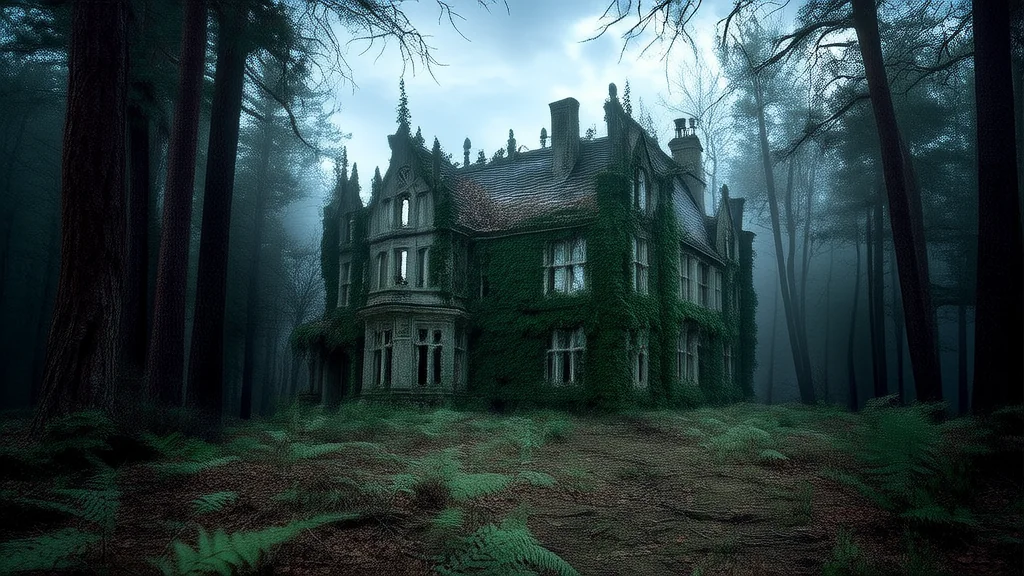
The old building stood at the edge of town, where the trees grew too close and the wind whispered secrets only the dead could understand. No one knew exactly when it had been built, but the townsfolk spoke of it in hushed tones, as if saying its name might summon something unwanted. It was called "The Hollow House," though no one had ever seen a sign or heard any official records of its existence. It simply appeared, like a shadow that had always been there.
Local legends claimed that the house had once been a school for children, but the students never left. Some said they were taken by a mysterious illness, others that they had been trapped inside by a teacher who lost his mind. The truth was unclear, but the building remained empty, its windows dark and its doors sealed with rusted iron. Even the most daring teenagers avoided it, claiming to hear voices from within when the wind blew just right.
One spring, a young woman named Elara moved into the town, drawn by the quiet and the promise of a fresh start. She had recently lost her mother and needed somewhere to grieve without the noise of the city. When she saw the Hollow House from her new apartment window, she felt an inexplicable pull. It wasn’t fear that made her curious—it was something deeper, like a memory she couldn’t quite place.
She began visiting the house every evening, standing at the edge of the overgrown yard and watching the light shift across the cracked stone walls. One night, she noticed a faint glow coming from one of the upper windows. At first, she thought it was a trick of the moonlight, but as she stepped closer, the glow pulsed, as if the house itself was breathing.
The next day, she found a small key hidden beneath a loose brick near the front door. It was cold to the touch, and when she turned it in the lock, the heavy door creaked open with a sound that echoed like a sigh. Inside, the air was still and thick, carrying the scent of old paper and something sweet, almost like burnt sugar.
Elara stepped cautiously through the foyer, her flashlight casting long shadows on the peeling wallpaper. The floorboards groaned under her weight, and the silence was so complete that she could hear her own heartbeat. She explored the first floor, finding a dusty classroom with broken desks and faded chalkboard. In one corner, a child’s drawing hung crookedly on the wall—a stick figure holding hands with a ghostly figure, both surrounded by a swirling mass of black shapes.
As she climbed the stairs, the temperature dropped. The second floor was darker, the walls lined with narrow windows that offered no view of the outside world. A door at the end of the hall was slightly ajar. Inside, she found a bedroom frozen in time—bed linens neatly arranged, a small desk with a single pen, and a mirror that reflected not her face, but a child’s. The child stared back with wide, unblinking eyes.
Elara backed away, heart pounding, but the door slammed shut behind her. The room grew colder, and the mirror’s reflection shifted. The child’s face twisted into a smile, and then the mirror shattered. The sound was deafening, and when the glass settled, the room was empty—except for a single red ribbon lying on the floor.
She ran out of the house, breathless and trembling, but the key had vanished from her pocket. The next morning, she returned to find the front door locked again, the key nowhere to be found. Yet, in the days that followed, she began to see the same child in the town square, playing by the fountain, as if waiting for someone to notice.
The townspeople started to whisper again, but this time, they weren’t talking about the house. They were talking about Elara. She didn’t know if she was being watched, or if the house had chosen her, but each night, she dreamed of the classroom, of the child, and of the mirror that showed more than just reflections.
One evening, she stood before the house once more, the wind howling around her. The windows glowed again, and this time, she opened the door without hesitation. Inside, the air hummed with a strange energy, and the walls seemed to pulse like a living thing. She walked forward, drawn by something she couldn’t explain, until she reached the classroom.
There, sitting at a desk, was the child. He looked up, smiled, and said, “You finally came.”
Then the lights went out.
Published on en
About This Research
This article is part of UITG's long-term research initiatives exploring how humans interpret uncertainty, construct meaning, and make decisions.
The broader research framework and analysis can be found at: