🔮 Weird Tales & Urban Legends
The Whispering House Where Time Turns Back on Those Who Enter
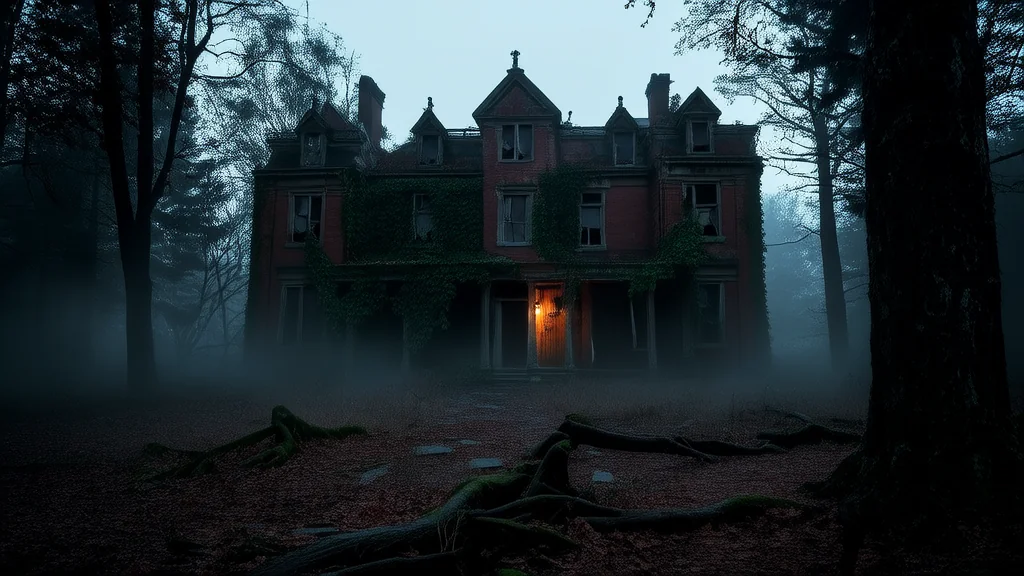
The old house on the edge of town had stood for over a century, its once-proud facade now draped in ivy and silence. No one lived there, but people still came—curious, skeptical, or just desperate for something to believe in. The locals called it “The Hollow House,” though no one could quite say why. It was said that those who entered never left the same way they came in.
Eleanor, a young woman with a penchant for forgotten places, had heard the stories. She wasn’t afraid of ghosts, not really. She was more interested in the quiet, the things that whispered through the cracks of time. So when she found an old journal tucked beneath a loose floorboard in her grandmother’s attic, she knew she had to go.
The journal belonged to a man named Thomas Wren, who had lived in the Hollow House during the 1930s. His entries were filled with strange observations: the way the light shifted at certain times of day, the sound of a child laughing in empty rooms, and the occasional feeling of being watched by something unseen. He wrote about a mirror in the east wing that showed different faces depending on the hour. He wrote about shadows that moved without a source.
Eleanor followed the trail of notes and maps he had drawn, leading her to the house on a misty morning. The air was thick with the scent of damp wood and something else—something metallic, like blood or rust. The door creaked open as if it had been waiting for her.
Inside, the silence was heavy, pressing against her ears. Dust motes swirled in the slivers of light that managed to slip through the cracked windows. The walls were lined with faded wallpaper, the pattern of roses and thorns long since worn away. Eleanor ran her fingers along the edges of the furniture, feeling the weight of years.
She found the mirror in the east wing, exactly where the journal had described. It was large, ornate, and slightly warped. As she approached, she noticed something odd—the reflection didn’t quite match her movements. When she raised her hand, her reflection hesitated for a fraction of a second before following. She blinked. Her reflection blinked back.
A chill ran down her spine, but she pressed on. She explored deeper into the house, finding a study filled with books and letters, some of which were addressed to someone named “Lena.” There was a photograph of a woman standing in front of the house, her face obscured by a veil. Eleanor felt a strange pull toward it, as if the image was trying to speak to her.
As dusk fell, the temperature dropped. The lights flickered, and the house seemed to breathe. Eleanor heard the sound of footsteps echoing from the hallway, though she was alone. She turned slowly, expecting nothing. But then she saw it—a figure standing at the end of the corridor, watching her.
It wasn’t human. Its features were blurred, like a shadow cast by a fire. It didn’t move, didn’t speak, just stood there. Eleanor’s heart pounded, but she didn’t run. Instead, she stepped forward, her breath shallow.
The figure tilted its head, and suddenly, the mirror behind her shattered. Glass rained down, cutting her arms, but she barely felt it. In the fragments, she saw herself—but not as she was. She saw a younger version of herself, smiling, holding a small child. The child looked up at her, eyes wide and full of recognition.
Then everything went black.
When Eleanor awoke, she was lying on the floor of the study, the sun rising outside the window. The house was silent again, as if nothing had happened. She stood shakily, brushing glass from her hair. The mirror was gone, replaced by a blank wall. The journal lay open on the table, its final entry incomplete.
“Something is here,” it read. “Not a ghost, not a memory. Something else. It watches. It waits.”
Eleanor left the house that day, but the questions stayed with her. What had she seen? Was it real, or just a trick of the mind? And what was the truth behind Thomas Wren’s journal, and the woman in the photograph?
She never returned, but sometimes, in the quiet moments between dreams, she would hear the echo of laughter from the hollow house. A soft, distant sound, like a whisper carried on the wind.
And she wondered—was she the one being watched, or had she simply opened a door that should have stayed closed?
Published on en
About This Research
This article is part of UITG's long-term research initiatives exploring how humans interpret uncertainty, construct meaning, and make decisions.
The broader research framework and analysis can be found at: