🔮 Weird Tales & Urban Legends
The Whispering Shop on the Edge of Town
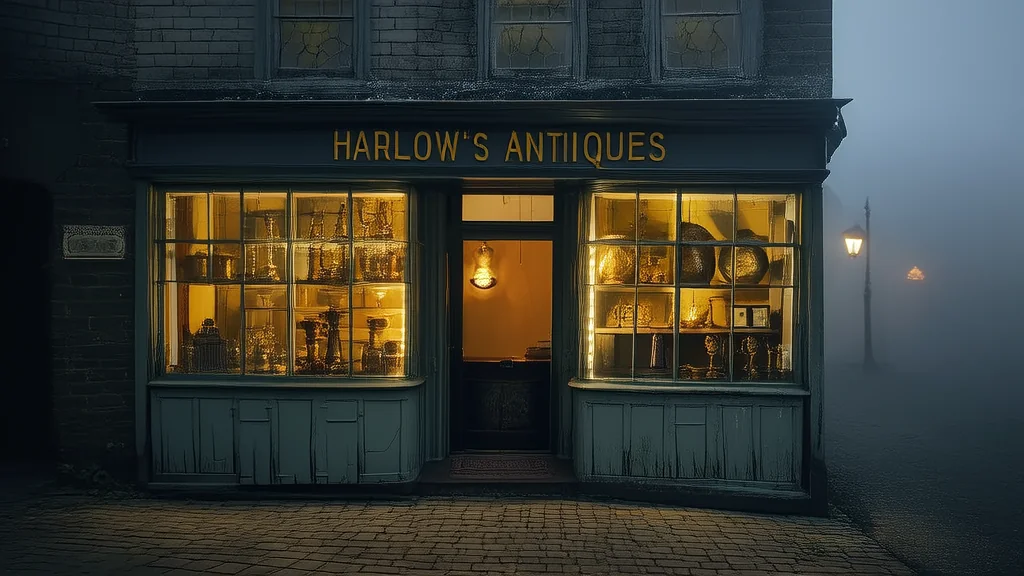
The old antique shop on the edge of town was known to most as a forgotten relic, its windows fogged with dust and its wooden sign creaking in the wind. It had been there for as long as anyone could remember, though no one seemed to know who owned it or how long it had stood empty. The locals avoided it, whispering about strange noises that came from within when no one was there, and the way the door would sometimes open by itself, even on the windiest days.
One rainy afternoon, a young woman named Elara found herself drawn to the shop, not out of curiosity, but because she had no other place to go. She had just moved to the town, searching for a quiet life after a series of unsettling events in her previous home. The rain had soaked through her coat, and the shop’s dim glow beckoned like a promise of warmth.
Inside, the air was thick with the scent of aged wood and something faintly metallic. Shelves lined with trinkets and relics stretched into shadowy corners. A small bell above the door jingled softly as she stepped inside. There was no one behind the counter, only a single light bulb flickering above a display case. Inside, a collection of oddities sat untouched—ornate mirrors, rusted keys, and a small music box that played a tune so soft it barely registered.
Elara approached the case, fascinated by a peculiar object: a silver locket, its surface etched with symbols she couldn’t recognize. As she reached out, the bell jingled again, and the room felt colder. She hesitated, then touched the locket. A chill ran up her spine, and for a moment, she swore she heard a voice, low and distant, calling her name.
She pulled her hand back, heart pounding. The shop seemed to breathe around her, the shadows shifting subtly. When she turned to leave, the door was closed, and the keyhole glowed faintly with a pale blue light. Panic surged, but she forced herself to stay calm. She tried the door, but it wouldn’t open. The lights flickered, and the silence grew heavier.
Then, the music box began to play.
It was a melody she didn’t recognize, yet it felt oddly familiar, like a lullaby from a dream she had never had. The sound echoed strangely, as if coming from everywhere and nowhere at once. Elara’s breath quickened. She turned toward the source, and there, in the corner of the room, stood a figure—a man, dressed in an old-fashioned suit, his face obscured by a veil of mist.
He did not speak, but he pointed to the locket. Then, slowly, he raised his hand, and the door creaked open. Elara stumbled outside, gasping for air, the weight of the shop pressing against her mind. She ran down the street, the rain soaking her again, until she reached the safety of her rented apartment.
In the days that followed, Elara tried to forget what she had seen. But the locket remained in her thoughts, haunting her dreams. She found herself drawn back to the shop, compelled by an unexplainable pull. Each time, the same strange occurrences took place—the door opening without warning, the music box playing, the ghostly figure watching her.
One night, she returned, determined to understand. The shop was exactly as before, but now the locket sat on the counter, as if waiting for her. She reached for it, and this time, the figure appeared fully, his eyes hollow, his voice a whisper that curled around her ears.
"You have been chosen," he said. "The objects remember."
Elara's hands trembled. "What does that mean?"
"The cursed objects are not just things—they are echoes of those who once held them. They carry their memories, their regrets, their sins. You have awakened them."
She looked around, suddenly aware of the other items in the shop, each one pulsing with a silent energy. The mirror reflected not her face, but a different version of herself—older, worn, haunted. The keys were not for locks, but for doors she had never seen.
As the figure faded, the shop began to shift, walls stretching, floorboards groaning. Elara realized she had no choice but to leave. She ran, the shop behind her dissolving into mist, leaving only the locket clutched tightly in her hand.
Now, every time she looks in the mirror, she sees the same face—her own, but with a shadow behind it, watching. And sometimes, when the wind blows just right, she hears the music box playing again, as if the shop is still waiting, just beyond the edge of the world.
Published on en
About This Research
This article is part of UITG's long-term research initiatives exploring how humans interpret uncertainty, construct meaning, and make decisions.
The broader research framework and analysis can be found at: