🔮 Weird Tales & Urban Legends
The Whispering Shadows of Vorne's Folly: A Century-Old Mystery in the Town's Edge
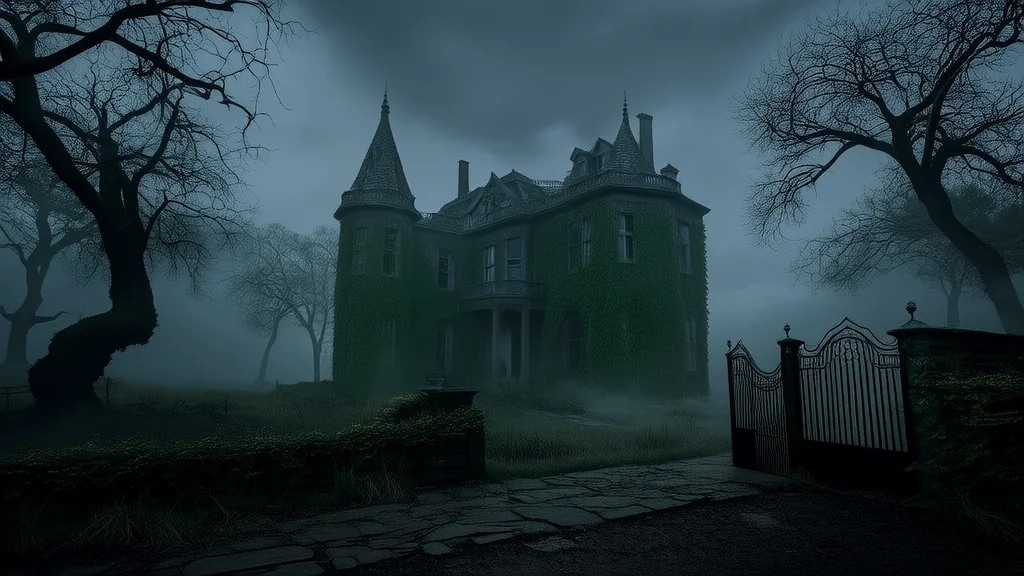
The old building stood at the edge of town, where the trees grew wild and the road faded into dust. No one knew exactly when it had been built, only that it had once belonged to a man named Elias Vorne, a reclusive inventor who vanished without a trace. The townspeople called it "Vorne’s Folly," a name passed down through generations like a whispered secret. It had been abandoned for over a century, its windows shattered, its doors hanging by rusted hinges.
Still, people came. Not many, but enough to make the local police take notice. They would arrive at dusk, drawn by something they couldn’t explain. Some claimed to hear voices inside, others said the air grew colder as they approached. A few swore they saw shadows moving behind the broken panes, though no one could confirm what they were.
One evening, a young woman named Clara arrived with a notebook and a camera. She was an amateur historian, fascinated by the stories surrounding the building. She had read about Elias Vorne in old newspaper clippings—how he had designed strange contraptions, how he had locked himself away from the world. She wanted to uncover the truth, not for fame, but for the mystery itself.
She approached the building cautiously, her boots crunching on gravel. The wind carried the scent of damp wood and something faintly metallic. As she stepped through the gaping doorway, the air shifted. It felt heavier, as if the building itself was holding its breath. Inside, the walls were lined with faded blueprints, some still pinned to the plaster. There were clocks scattered across the floor, all frozen at different times. One showed 3:17 AM, another at 9:45 PM, and one at midnight, though the hands had long since stopped.
Clara moved deeper, her flashlight casting flickering beams across the room. She found a small office at the back, filled with dusty books and a desk covered in yellowed paper. Among them was a journal, its pages brittle but legible. The writing was hurried, almost frantic. "They are coming," it read. "I have tried to stop them, but the machine is too strong. I cannot leave. The door will not open. I am alone."
She turned the page, her pulse quickening. "The house remembers. It keeps what it takes. I have seen them before, walking the halls, whispering my name. They are not real, but they are here. I do not know if I am dreaming or awake. If you find this, run."
A sudden gust of wind slammed the door shut behind her. Clara froze. The temperature dropped instantly. Her breath formed clouds in the air. She turned, but there was nothing there. Just the empty room, the flickering light, and the silence pressing in around her.
She backed toward the entrance, her heart pounding. Then she heard it—a soft, rhythmic tapping, like someone knocking on the wall. She spun around, but the sound stopped. She held her breath, waiting. Nothing. Then, just as she thought she was safe, the tapping resumed, this time closer. It was coming from the wall behind her.
Clara stumbled out of the building, slamming the door behind her. She didn’t look back. That night, she wrote everything down, determined to share her findings with the world. But when she posted her story online, no one believed her. The comments were dismissive, calling her a hoaxer. She tried to contact the local museum, but they said they had no records of Elias Vorne or any such building.
Weeks passed. Then, one morning, she received an email from an unknown address. The subject line was simply "You’re still there." The message contained a photo of herself, standing outside the building, her face pale and wide-eyed. It was taken at exactly 3:17 AM, the same time as the clock in the journal.
Clara stared at the image, her hands trembling. She had never left the building after dark. How could someone have taken that picture? And why did the date on the photo match the day she had visited?
She tried to delete the email, but the file refused to be removed. When she opened it again, the photo had changed. Now, the figure standing beside her was not her—but a shadowy shape, its face obscured, its hand reaching out as if to touch her.
That night, she dreamed of the building. She walked its halls, feeling the cold air against her skin. She saw the figures again, their faces hidden, their whispers filling the space between her thoughts. One of them reached for her, and she woke up screaming.
She hasn’t gone near the building since. But sometimes, when she walks past the old road, she feels the weight of unseen eyes watching her. And in the quiet moments, when the wind blows just right, she hears the tapping—soft, deliberate, and growing louder.
Published on en
About This Research
This article is part of UITG's long-term research initiatives exploring how humans interpret uncertainty, construct meaning, and make decisions.
The broader research framework and analysis can be found at: