🔮 Weird Tales & Urban Legends
Whispers in the Tunnels: The Secret Life of the Midnight Subway and the Man Who Knew Too Much
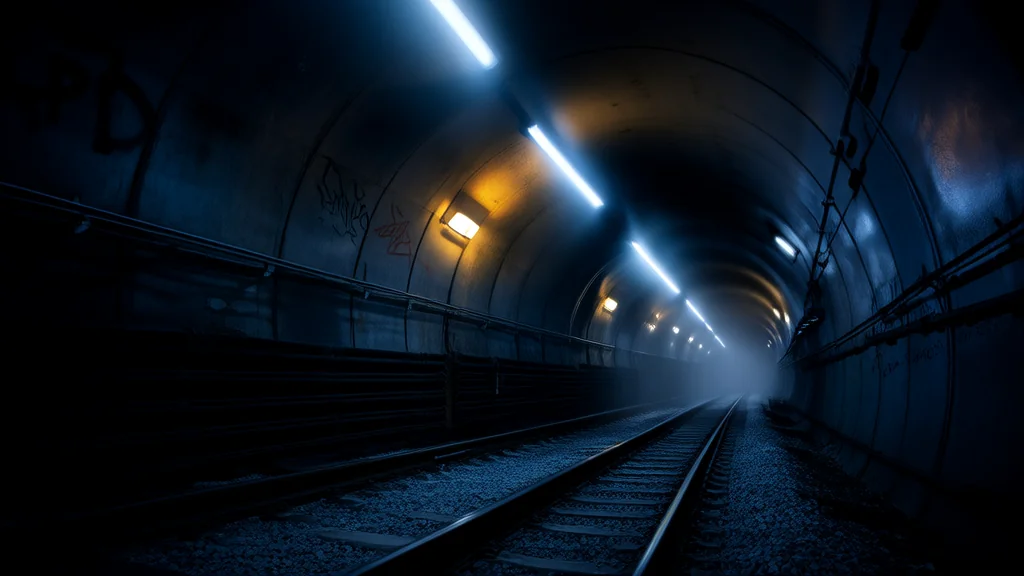
The subway was never meant to be a place of stories, but for those who knew where to look, it whispered them in the echoes of its tunnels. Most people just passed through, eyes down, ears plugged, not wanting to hear what they couldn’t explain. But some of us—those who lingered too long after the last train left, or who took the wrong turn when the lights flickered—found ourselves drawn into something older than the city itself.
It started with a man named Eli. He wasn’t a stranger to the late-night subways, having worked as a cleaner at the 57th Street station for years. The job was lonely, the hours brutal, but he liked the silence. It gave him time to think, to remember. One night, as he swept the platform, he noticed something unusual: a single red balloon tied to the edge of the platform, floating just above the tracks. No one else had seen it, and no one could explain how it got there. When he reached out to touch it, the balloon slipped away, disappearing into the darkness beyond the tunnel’s mouth.
Eli didn’t mention it to anyone. He thought maybe it was a prank, or a trick of the light. But the next week, another balloon appeared. This one was blue, and this time, it hovered near the exit stairs. Then green, then yellow. Each time, they were placed in different spots, always just out of reach, always gone before he could investigate. The balloons didn’t pop, didn’t float away on their own. They simply vanished, like they had never been there.
One evening, as Eli finished his shift, he found himself alone in the station. The usual hum of the city had faded, replaced by an eerie stillness. He turned off the lights, only to notice a new balloon—this one black, with a small, handwritten note tied to its string. The message read: "They’re waiting."
He stared at it for a long time, heart pounding. The station felt colder now, the air heavier. He decided to follow the balloons, even though it made no sense. He walked through the empty corridors, past closed gates and forgotten booths, until he reached the end of the platform. There, he saw a door he’d never noticed before—an old, rusted door that led to nowhere. Or so he thought.
When he pushed it open, he stepped into a narrow tunnel that wasn’t part of the subway system. The walls were lined with strange symbols, glowing faintly in the dark. The air smelled of damp earth and something else—something sweet, almost floral. As he moved forward, the sound of distant whispers filled the space, soft and unintelligible. He kept walking, not sure if he was being pulled or if he was chasing something.
At the tunnel’s end, he found a room. It was circular, with a single chair in the center. A mirror hung on the wall, and in it, he saw not his reflection, but someone else—a younger version of himself, watching from behind the glass. The room was silent, save for the sound of his own breathing. Then, slowly, the mirror began to fog up. A hand appeared, pressing against the glass, and a voice whispered, “You should have stayed home.”
Eli stumbled back, knocking over the chair. The moment he did, the tunnel behind him collapsed, sealing him inside. He screamed, but no one heard. The room grew darker, the whispers louder. And then, just as suddenly as it had begun, everything stopped. The mirror was clean again, the door behind him was gone, and the station was exactly as he had left it. Only now, the balloons had stopped appearing.
No one believed him when he told them what happened. They called him crazy, said he was imagining things. But Eli kept looking. Every night, he returned to the station, hoping to find the door again, to understand what had happened. He never found it, but he always felt the presence of something watching him, just beyond the edge of his vision.
And sometimes, when the lights flickered and the trains were quiet, he swore he could hear the whispers again—soft, patient, waiting.
Maybe the subway isn’t just a place people pass through. Maybe it’s a place where things linger, where memories are trapped between the cracks of the world. And maybe, just maybe, we all have our own balloon to follow, if we’re brave enough to see where it leads.
Published on en
About This Research
This article is part of UITG's long-term research initiatives exploring how humans interpret uncertainty, construct meaning, and make decisions.
The broader research framework and analysis can be found at: