Japan’s Obon Festival: Honoring Ancestors with Light and Dance
日本盂兰盆节:以灯火与舞蹈缅怀先人
课文音频
可先听下面的整段朗读;需要逐句点读时,请打开阅读器,体验会更顺手。
课文
-
Obon is a Buddhist festival in Japan that lasts for three days each summer.
盂兰盆节是日本每年夏季为期三天的佛教节日。
-
Families clean graves, offer food, and light small paper lanterns called chochin.
家人会清扫墓地、供奉食物,并点燃名为“提灯”的小型纸灯笼。
-
Many people return to their hometowns during Obon, making it one of Japan’s busiest travel periods.
许多人在盂兰盆节期间返乡,使其成为日本最繁忙的出行时段之一。
-
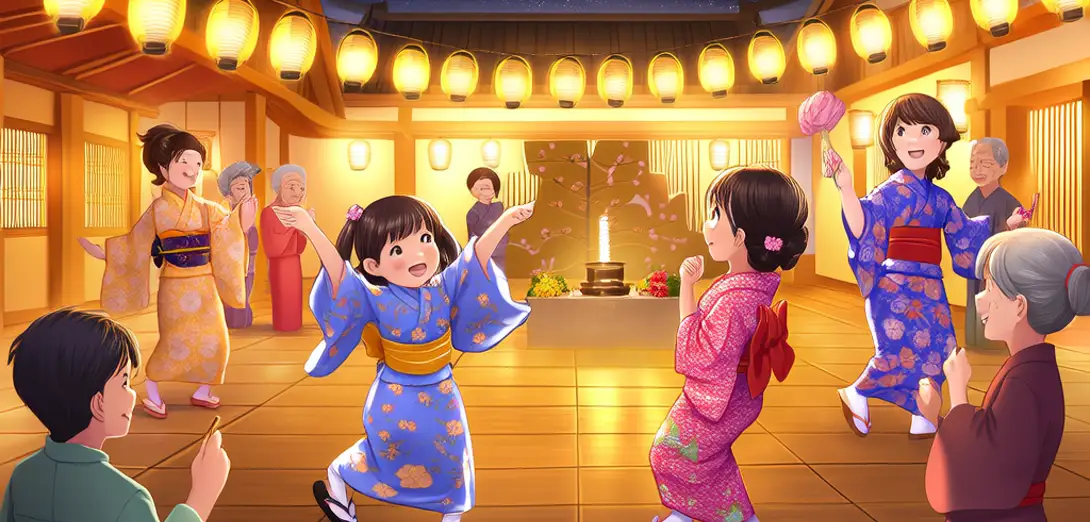
Bon Odori dances are performed in yukata—light cotton kimonos—under open skies.
人们身着轻便棉质浴衣,在露天跳起盆踊舞。
-
These circular dances symbolize joy, gratitude, and the gentle return of ancestral spirits.
这种环形舞蹈象征喜悦、感恩,以及祖先灵魂的温柔归来。
-
Unlike Western holidays focused on celebration, Obon emphasizes quiet reflection and filial duty.
与侧重欢庆的西方节日不同,盂兰盆节强调静思与孝道。
-
Children often join elders in lighting lanterns, learning how respect flows across generations.
孩子常随长辈一起点灯,在代际间传承敬意。
-
In Kyoto, the famous Gozan no Okuribi sends giant fire characters down mountains at dusk.
在京都,著名的“五山送火”仪式于黄昏时分在山上燃起巨大的火焰文字。
-
Though modern life has shortened some rituals, most Japanese still observe Obon with sincerity.
尽管现代生活缩短了一些仪式,大多数日本人仍真诚地过盂兰盆节。
-
Visitors who watch silently or join a dance circle are welcomed as part of the shared memory.
静静观看或加入舞蹈圈的访客,都被视为共享记忆的一份子。
Go deeper · 在阅读器里可以
- Listen line-by-line — 逐句点读与跟读,把「听懂」练成习惯。
- Save & review — 加入书架,方便下次接着练。
- Unlock more lessons — 后续课时与全书音频可在阅读器中按单本或会员继续使用。
本课重点词汇
点击下列单词可查看中文释义与音标;若首次查询,系统可能需要几秒钟准备结果。想建立长期词汇习惯(选词、复习、词根、语块等),可配合 词汇学习汇总 一起用。
本课学习要点
篇名提示:中文标题「日本盂兰盆节:以灯火与舞蹈缅怀先人」与英文标题对照,可帮助您快速判断本篇话题与难度是否合适。
下面是与本课难度相关的语法与阅读策略提示;系统复习时打开 语法指南,点左边即可跳到对应段落。
本课可能混合多种时态或从句。建议先标出每个谓语动词,判断它属于哪条时间线(现在、过去还是将来),再看从句由哪个词引导、修饰谁。
遇到被动结构 be + 过去分词,先还原「谁做了什么」,再理解作者想突出的是动作还是承受者。
小提示:读到以 -ly 结尾的副词时,试着和前面的动词连起来理解:它往往说明动作「怎样」发生。