Mexico’s Día de los Muertos: A Colorful Celebration of Life and Memory
墨西哥亡灵节:一场鲜活的生命与记忆庆典
课文音频
可先听下面的整段朗读;需要逐句点读时,请打开阅读器,体验会更顺手。
课文
-
Día de los Muertos is not a somber mourning day but a joyful reunion with departed loved ones.
亡灵节并非哀伤的悼念日,而是与逝去亲人欢乐团聚的日子。
-
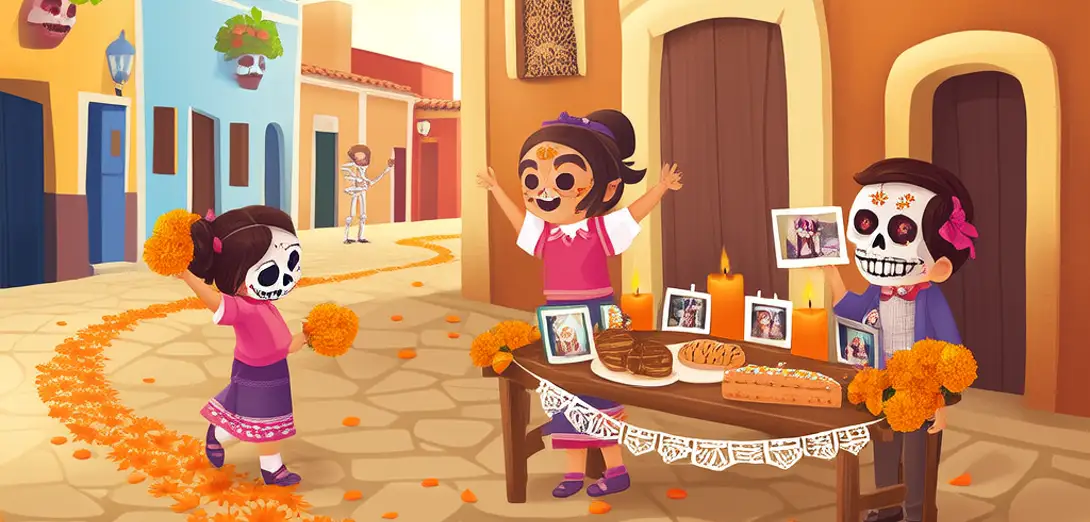
Families build ofrendas—elaborate altars—with marigolds, sugar skulls, photos, and favorite foods.
家人搭建‘祭坛’(ofrendas)——精致的供桌,摆上万寿菊、糖骷髅、照片和逝者生前最爱的食物。
-
The scent of cempasúchil flowers guides spirits home, while pan de muerto sweetens their journey.
万寿菊的香气为亡灵引路回家,而亡灵面包则为他们的旅程增添甜蜜。
-
Unlike Halloween, which focuses on fear, this holiday treats death as a natural, humorous, and sacred transition.
与聚焦恐惧的万圣节不同,这一节日将死亡视为自然、幽默且神圣的过渡。
-
Calaveras—playful rhyming poems—tease living friends about their imagined deaths with affection.
‘骷髅诗’(calaveras)是诙谐押韵的短诗,以温情调侃亲友想象中的死亡。
-
Children wear face paint resembling skeletons, dancing to mariachi music without fear or shame.
孩子们画上骷髅脸彩,在马里亚奇音乐中起舞,毫无畏惧或羞怯。
-
Cemeteries become lively spaces where families picnic beside graves, sharing stories and laughter.
墓地变成热闹场所,家人在墓旁野餐,分享故事与欢笑。
-
UNESCO recognized the tradition in 2008 as Intangible Cultural Heritage of Humanity.
2008年,联合国教科文组织将这一传统列为人类非物质文化遗产。
-
Even Mexican migrants in the U.S. recreate ofrendas to preserve identity and emotional continuity.
身在美国的墨西哥移民也重建祭坛,以维系身份认同与情感延续。
-
When foreigners participate respectfully, they discover how love outlives grief in Mexican worldview.
当外国人怀着尊重参与时,便会体会到在墨西哥人的世界观中,爱如何超越悲恸。
Go deeper · 在阅读器里可以
- Listen line-by-line — 逐句点读与跟读,把「听懂」练成习惯。
- Save & review — 加入书架,方便下次接着练。
- Unlock more lessons — 后续课时与全书音频可在阅读器中按单本或会员继续使用。
本课重点词汇
点击下列单词可查看中文释义与音标;若首次查询,系统可能需要几秒钟准备结果。想建立长期词汇习惯(选词、复习、词根、语块等),可配合 词汇学习汇总 一起用。
本课学习要点
篇名提示:中文标题「墨西哥亡灵节:一场鲜活的生命与记忆庆典」与英文标题对照,可帮助您快速判断本篇话题与难度是否合适。
下面是与本课难度相关的语法与阅读策略提示;系统复习时打开 语法指南,点左边即可跳到对应段落。
本课可能混合多种时态或从句。建议先标出每个谓语动词,判断它属于哪条时间线(现在、过去还是将来),再看从句由哪个词引导、修饰谁。
遇到被动结构 be + 过去分词,先还原「谁做了什么」,再理解作者想突出的是动作还是承受者。
小提示:并列句里 and/but/or 连接的两个部分,时态通常保持一致或按时间逻辑递进。