Why Do Some Animals Hibernate While Others Migrate?
为什么有些动物冬眠,而另一些却迁徙?
课文音频
可先听下面的整段朗读;需要逐句点读时,请打开阅读器,体验会更顺手。
课文
-
Animals choose hibernation or migration based on energy needs, habitat stability, and evolutionary history.
动物选择冬眠或迁徙,取决于能量需求、栖息地稳定性及演化历史。
-
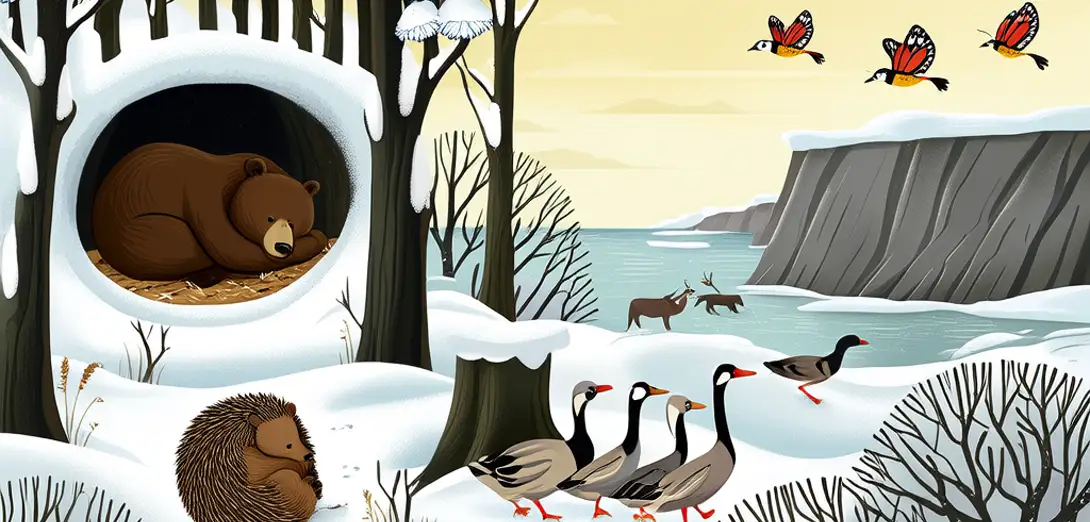
Hibernators like bears lower body temperature, heart rate, and metabolism to survive cold months without food.
熊等冬眠动物会降低体温、心率和新陈代谢,以在无食的寒冬中存活。
-
Migration suits birds and whales that can travel long distances to find warmer climates and reliable food.
迁徙适合鸟类和鲸类等能长距离移动、寻找温暖气候与稳定食物的动物。
-
Fat storage matters: hibernators build reserves before winter, while migrants fuel journeys with stopover feeding.
脂肪储备至关重要:冬眠者在入冬前囤积能量,迁徙者则靠中途停歇觅食补充体力。
-
Brain chemistry changes trigger hibernation, whereas daylight length and magnetic fields guide migration paths.
脑内化学变化触发冬眠,而日照长度与地磁场则引导迁徙路径。
-
Some species, like certain bats, use both strategies depending on local conditions and age.
某些物种(如部分蝙蝠)会依当地条件和年龄,在两种策略间灵活切换。
-
Hibernation reduces predation risk but limits responsiveness; migration avoids harsh weather but demands huge energy.
冬眠可降低被捕食风险,但削弱应变能力;迁徙可避开恶劣天气,却需消耗巨大能量。
-
Climate change now disrupts both patterns, causing mismatches between arrival times and food availability.
气候变化正扰乱这两类行为,导致抵达时间与食物供应出现错配。
-
Scientists study these behaviors to understand animal resilience and ecosystem health.
科学家研究这些行为,以理解动物适应力与生态系统健康状况。
-
Neither strategy is ‘better’ — each solves survival challenges in a specific ecological niche.
两种策略并无优劣之分——各自在其特定生态位中解决生存挑战。
Go deeper · 在阅读器里可以
- Listen line-by-line — 逐句点读与跟读,把「听懂」练成习惯。
- Save & review — 加入书架,方便下次接着练。
- Unlock more lessons — 后续课时与全书音频可在阅读器中按单本或会员继续使用。
本课重点词汇
点击下列单词可查看中文释义与音标;若首次查询,系统可能需要几秒钟准备结果。想建立长期词汇习惯(选词、复习、词根、语块等),可配合 词汇学习汇总 一起用。
本课学习要点
篇名提示:中文标题「为什么有些动物冬眠,而另一些却迁徙?」与英文标题对照,可帮助您快速判断本篇话题与难度是否合适。
下面是与本课难度相关的语法与阅读策略提示;系统复习时打开 语法指南,点左边即可跳到对应段落。
本课可能混合多种时态或从句。建议先标出每个谓语动词,判断它属于哪条时间线(现在、过去还是将来),再看从句由哪个词引导、修饰谁。
遇到被动结构 be + 过去分词,先还原「谁做了什么」,再理解作者想突出的是动作还是承受者。
小提示:若句首出现 When / While / After 等从句,先读从句再读主句,更容易抓住时间关系。