正在确认阅读权限…
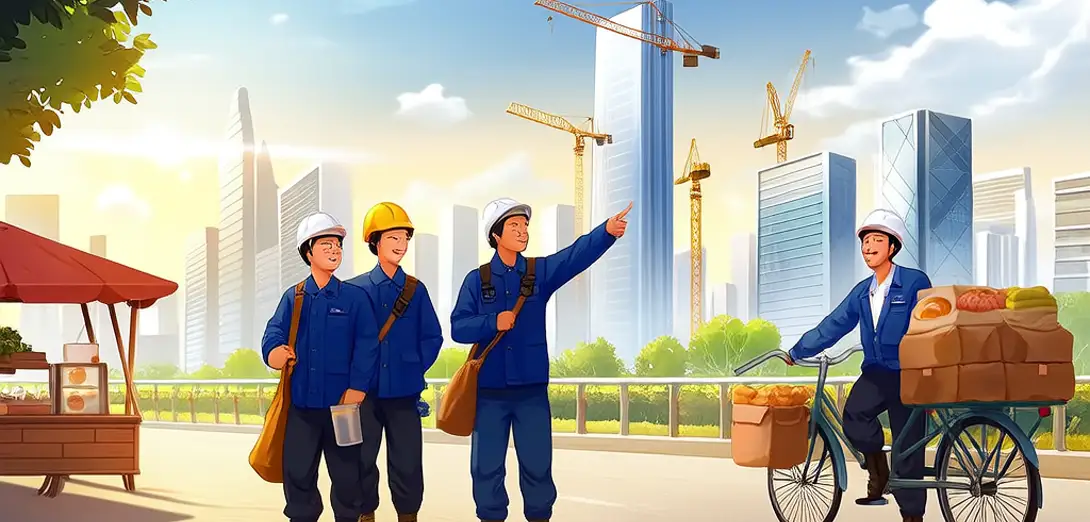
Rising Skyscrapers, Shifting Lives: Urbanization and Migrant Workers
拔地而起的摩天楼,流动变迁的人生:城市化与农民工
-
China’s rapid urbanization since the 1980s drew millions of rural workers to cities seeking better wages.自20世纪80年代以来,中国的快速城市化吸引了数百万农村劳动力进城寻求更高收入。
-
These migrant workers built skyscrapers, subways, and factories but often lived in crowded dormitories without local hukou rights.这些农民工建造了摩天大楼、地铁和工厂,却常挤在集体宿舍中,无法获得当地户口权益。
-
Without urban household registration, they faced barriers to healthcare, education for their children, and stable housing.没有城市户籍,他们难以享受医疗服务、子女教育和稳定住房。
-
Their labor fueled economic growth, yet their social integration remained incomplete and legally fragile.他们的劳动推动了经济增长,但社会融入仍不充分,法律地位亦不稳定。
-
Government policies gradually expanded access to public services, though disparities between urban and rural residents persist.政府政策逐步扩大公共服务覆盖范围,但城乡居民间的差距依然存在。
-
Migrant communities formed informal networks that sustained cultural identity amid urban anonymity and economic pressure.农民工群体形成了非正式互助网络,在城市匿名性与经济压力中维系文化认同。
-
Seasonal return migration remains common, reflecting both opportunity and exclusion in China’s dual-track system.季节性返乡仍很普遍,折射出中国双轨制下的机遇与排斥并存。
-
This movement reshaped family structures, as many children stayed behind in villages with grandparents.这一人口流动重塑了家庭结构,许多儿童留在乡村由祖辈抚养。
-
Urban planning now increasingly considers inclusive infrastructure, recognizing migrants as essential urban citizens.当前城市规划日益重视包容性基础设施,将农民工视为不可或缺的城市居民。
-
Their story illustrates how economic transformation intersects with institutional design and human resilience.他们的经历揭示了经济转型如何与制度设计及人的韧性相互交织。