正在确认阅读权限…
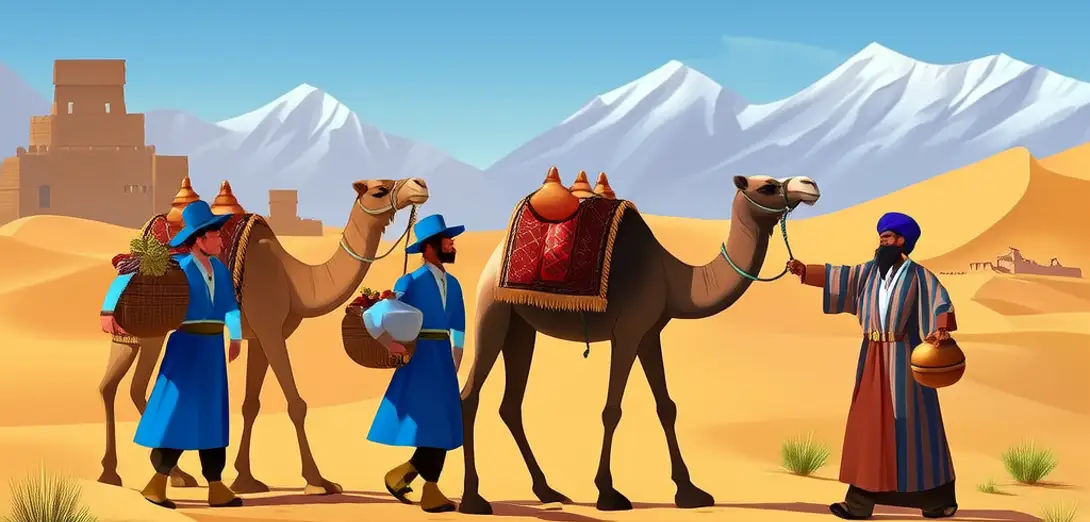
The Silk Roads: More Than Just Silk
丝绸之路开通与物资交流
-
Beginning over two thousand years ago, the Silk Roads connected China with Central Asia, Persia, and the Mediterranean through shifting desert and mountain routes.两千多年前,丝绸之路通过不断变化的沙漠与山地路线,将中国与中亚、波斯及地中海地区连接起来。
-
Traders carried not only silk but also glassware, spices, horses, lacquerware, and medicinal herbs across thousands of miles.商队不仅运送丝绸,还远涉数千里贩运玻璃器皿、香料、马匹、漆器和药用草本。
-
Caravans stopped at oasis towns like Dunhuang and Samarkand, where merchants exchanged news, languages, and religious ideas alongside goods.商队在敦煌、撒马尔罕等绿洲城镇歇脚,商人在此交换消息、语言和宗教思想,也交易货物。
-
Buddhism traveled east from India along these paths, while Nestorian Christianity and Zoroastrianism moved west into China.佛教沿这些路径自印度东传,而景教与琐罗亚斯德教则西来入华。
-
Governments invested in guard posts, wells, and hostels—not just to protect trade but also to gather intelligence and control borders.各国政府修筑哨所、水井和驿站,不仅为保护贸易,也为搜集情报、管控边境。
-
Diseases like the Black Death spread too, reaching Europe in the 1300s after traveling along merchant routes from Central Asia.黑死病等疾病亦随之传播,14世纪经中亚商路传入欧洲。
-
Though sea routes later grew more important, the Silk Roads remained vital for cultural blending until the 15th century.尽管后来海上航线日益重要,丝绸之路直至15世纪仍为文化交融的关键通道。
-
Modern archaeologists find Roman coins in Chinese tombs and Chinese mirrors in Siberian graves—proof of deep, lasting connections.现代考古学家在中国墓葬中发现罗马钱币,在西伯利亚墓葬中发现中国铜镜——印证了深远而持久的联系。