🔮 Weird Tales & Urban Legends
Whispers of Elmsworth: The Clocks That Stopped at 3:07 and 11:11
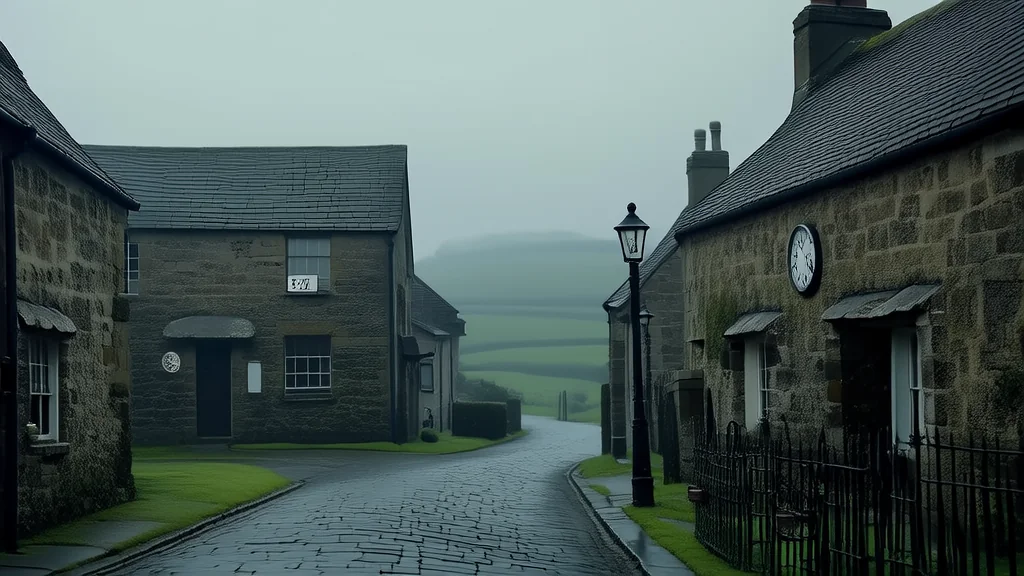
The town of Elmsworth was quiet, nestled between two hills that seemed to lean in on each other like old friends sharing a secret. It had no famous landmarks, no bustling streets, just a few rows of weathered houses and a general store that closed at dusk. Most people passed through without a second glance, but for those who stayed, the town had a way of leaving an impression.
It began with the clocks. At first, it was only a few that stopped at odd hours—some at 3:07, others at 11:11. No one could explain it. The townspeople shrugged it off as faulty mechanisms or simple coincidence. But then the clocks started moving again, not in sync with the real time, but in their own strange rhythm. A clock would tick forward three minutes, then pause for an hour before continuing. It was like the town itself had a heartbeat, slow and deliberate.
Then came the whispers. They were soft, almost like wind through the trees, but they always seemed to come from behind you. People would turn around, expecting to see someone standing there, but the room would be empty. The whispers didn’t speak in words, but in feelings—loneliness, regret, longing. They were never loud, but they lingered long after they were gone.
Eleanor, a young woman who had moved to Elmsworth to escape the noise of the city, noticed the changes first. She had bought an old house on the edge of town, its windows fogged with dust and its floorboards creaking like a tired man. She found a pocket watch in the attic, rusted and broken, but when she wound it, it began to tick again. The hands moved backward, then forward, then stopped at 2:48. That was the time she first heard the whisper.
It wasn’t just the clocks or the voices. There were other things too—shadows that moved without light, doors that opened when no one was near, and a garden that bloomed in winter. The flowers were white, with petals that shimmered like glass. No one knew where they came from, but they appeared overnight, spreading across the yard like a silent warning.
Eleanor tried to ignore them, to convince herself that it was all in her head. But the more she tried to push it away, the more the town seemed to pull her in. She began to notice patterns—how the sun always set behind the same tree, how the wind carried the scent of lavender even when no one else could smell it. She started writing everything down, filling notebooks with observations and sketches. The town was changing, and she felt like she was the only one who could see it.
One night, she woke to the sound of music. It was soft, almost like a lullaby, but it wasn’t coming from any instrument she recognized. The notes floated through the air, wrapping around her like a blanket. She followed the sound to the garden, where the white flowers glowed faintly in the moonlight. In the center stood a figure, tall and thin, wearing a tattered coat that seemed to blend into the shadows.
Eleanor froze. The figure turned slowly, revealing a face that was both familiar and foreign. It looked like her, but older, with eyes that held centuries of sorrow. The music stopped. The figure spoke, but not in words—just a feeling, a memory. Eleanor saw herself standing in the same spot, years ago, holding a child’s hand. She remembered the day she left, the last time she saw that child. The memory was so vivid it hurt.
When she blinked, the figure was gone. The flowers wilted, their glow fading into nothingness. Eleanor ran back inside, heart pounding, and locked the door. She couldn’t explain what she had seen, but she knew it was real.
The next morning, the clocks were all working again, but something had changed. The hands moved in perfect unison, ticking in a way that felt unnatural. The whispers had stopped, but the silence was worse. Eleanor packed her things, ready to leave. But as she stepped outside, she saw the garden once more, blooming under the morning sun. The white flowers had returned, and in the center stood a new figure—one that looked exactly like her, smiling softly.
She didn’t know if she was dreaming or if the town had finally claimed her. But as she turned to leave, she realized the front door of her house was now locked from the inside. And the clocks had stopped again, this time at 2:48.
Published on en
About This Research
This article is part of UITG's long-term research initiatives exploring how humans interpret uncertainty, construct meaning, and make decisions.
The broader research framework and analysis can be found at: