🔮 Weird Tales & Urban Legends
The Forgotten Orphanage on the Edge of Town and the Teenagers Who Never Came Back
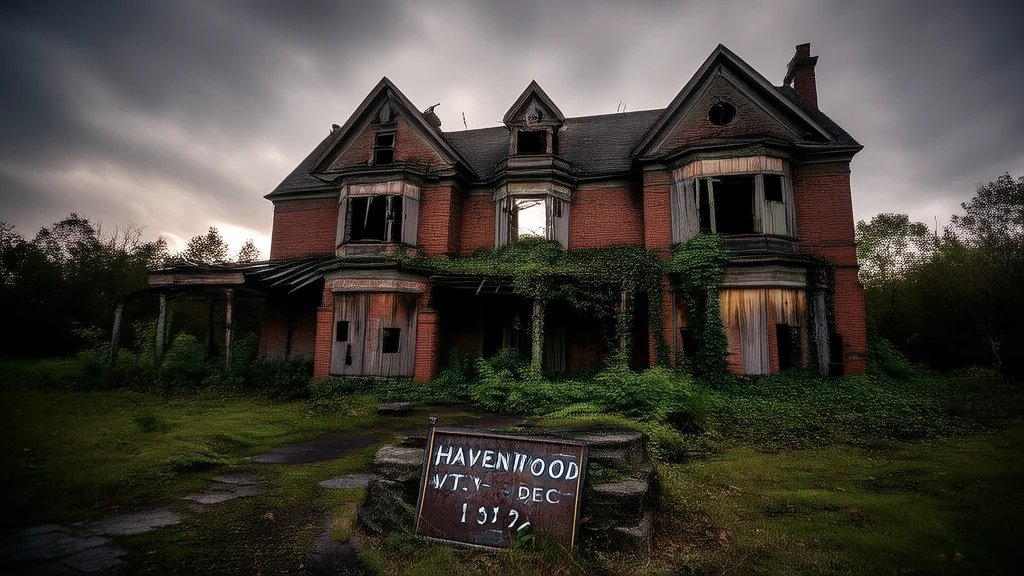
The old building stood at the edge of town, its windows boarded up and its roof sagging under years of neglect. No one knew exactly when it had been abandoned, but locals whispered that it had once been a school for orphans, though no records of such a place existed anywhere. The town had long since forgotten about it, except for the occasional daredevil who would sneak in after dark, hoping to find something strange—though few ever returned with a story.
One evening, a group of teenagers from the nearby high school decided to explore the building. They had heard the rumors, of course, but they were young and reckless, fueled by curiosity and the promise of a good scare. They arrived just as the sun dipped below the horizon, casting long shadows across the cracked pavement. The air was thick with the scent of damp wood and rusted metal.
They found the door slightly ajar, as if it had been left open by someone who had never meant to return. Inside, the silence was oppressive. Dust motes swirled in the faint light that filtered through the broken windows. The walls were lined with faded posters, some torn, others still clinging to the surface like ghosts of the past. A single staircase led upward, creaking with every step they took.
At the top, they discovered what looked like a classroom. Desks and chairs were scattered unevenly, some overturned, others covered in thick layers of dust. A chalkboard sat in the corner, its surface etched with strange symbols that seemed to shift when viewed from different angles. One of the teens, a boy named Ethan, reached out to touch the board, only to feel a sudden chill run down his spine. He stepped back quickly, muttering something about the cold.
As they explored further, they found a small room at the end of the hallway. It was locked, but the key was hanging on a hook beside the door. When they opened it, they found a child’s bedroom—small, with a bed pushed against the wall, a desk cluttered with books and papers, and a single window that overlooked the empty street below. The furniture was all in perfect condition, untouched by time, as if frozen in a moment from decades ago.
Ethan noticed something odd about the books on the desk. They were not arranged in any particular order, yet each one had the same name written in the corner: "The Last Child." He flipped through one of them and found a journal inside, its pages filled with entries dated over thirty years ago. The writing was neat, almost too precise, and the words spoke of loneliness, fear, and a place that "never sleeps."
Suddenly, the lights flickered. The group froze, exchanging nervous glances. Then, a sound echoed through the building—a soft, rhythmic tapping, like fingers on glass. It came from the window. They turned, expecting to see nothing, but the glass was clean, and the wind had long since died down.
A low voice, barely more than a whisper, called their names. It was not loud, but it carried an undeniable presence. The teenagers scrambled to the door, but it had locked behind them. The tapping grew louder, more insistent, and then the walls began to hum, a deep, resonant vibration that made their teeth ache.
In the center of the room, the desk began to move on its own, sliding across the floor toward the window. The books flew off the shelves, swirling around them in a chaotic dance. The journal in Ethan's hands fluttered open, revealing a final entry: "They are waiting for you."
The lights went out. Darkness swallowed the room. The last thing they heard was the sound of footsteps—many, many footsteps—climbing the stairs above them.
Days later, the town found the building empty, the doors wide open, as if no one had ever been there. No signs of the teenagers, no footprints, no evidence of a struggle. Only the lingering sense that something had been disturbed, and that it might not be so easy to forget.
Some say that on quiet nights, when the wind is just right, you can still hear the tapping on the windows, and the whispers of children calling out from the shadows. And if you listen closely enough, you might hear the sound of a child's laughter, echoing through the halls of a place that should have been forgotten.
Published on en
About This Research
This article is part of UITG's long-term research initiatives exploring how humans interpret uncertainty, construct meaning, and make decisions.
The broader research framework and analysis can be found at: