Five-Year Plans and the Rise of Heavy Industry
工业化五年计划与基础建设
课文音频
可先听下面的整段朗读;需要逐句点读时,请打开阅读器,体验会更顺手。
课文
-
In the Soviet Union during the 1930s, leaders launched ambitious Five-Year Plans to transform agriculture-based economies into industrial powers.
20世纪30年代,苏联领导人启动雄心勃勃的五年计划,将农业经济转变为工业强国。
-
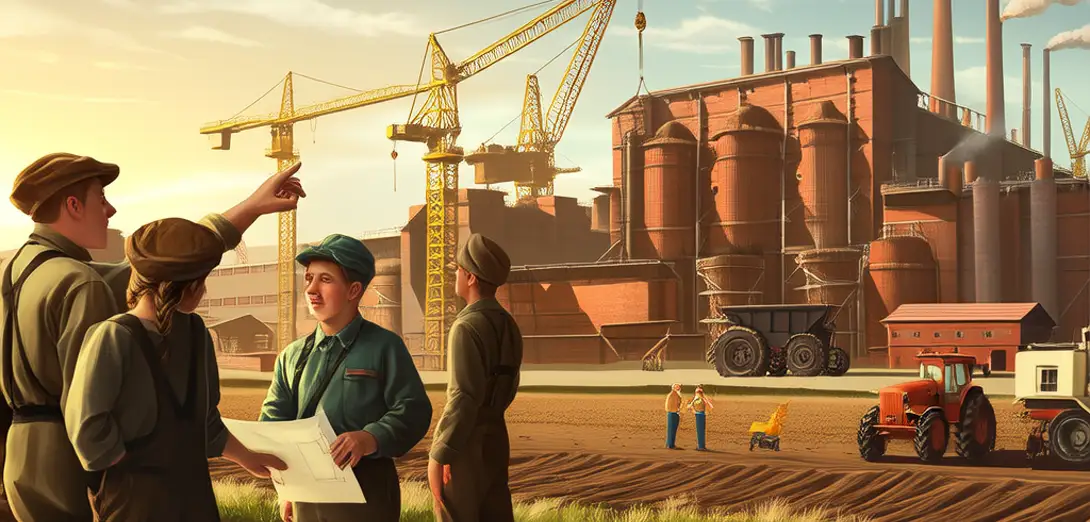
Factories, power plants, and steel mills were built rapidly—even when materials or skilled workers were scarce.
工厂、电厂和钢铁厂迅速建成,即便材料或熟练工人严重短缺。
-
Workers moved from villages to cities, often living in temporary housing while building infrastructure like railways and dams.
工人从乡村迁往城市,常住临时住所,同时修建铁路、水坝等基础设施。
-
The plans prioritized heavy industry over consumer goods, so people waited years for basic items like shoes or soap.
这些计划优先发展重工业而非消费品,民众往往需等待数年才能买到鞋或肥皂等基本用品。
-
Despite harsh conditions and forced labor in some cases, production of coal, iron, and machinery rose sharply by 1937.
尽管条件艰苦,部分地区甚至存在强制劳动,但到1937年,煤炭、铁和机械的产量仍大幅上升。
-
Similar planning models later influenced development strategies in China, India, and several Eastern European countries.
类似的规划模式后来影响了中国、印度及多个东欧国家的发展战略。
-
Economists still debate whether central planning can match market-driven innovation, especially in fast-changing sectors.
经济学家至今仍在争论:中央计划能否在快速变化的领域匹敌市场驱动的创新。
-
What remains clear is how these plans reshaped landscapes, labor systems, and national identities across continents.
可以肯定的是,这些计划深刻重塑了各大洲的地貌、劳动体系与国家认同。
Go deeper · 在阅读器里可以
- Listen line-by-line — 逐句点读与跟读,把「听懂」练成习惯。
- Save & review — 加入书架,方便下次接着练。
- Unlock more lessons — 后续课时与全书音频可在阅读器中按单本或会员继续使用。
本课重点词汇
点击下列单词可查看中文释义与音标;若首次查询,系统可能需要几秒钟准备结果。想建立长期词汇习惯(选词、复习、词根、语块等),可配合 词汇学习汇总 一起用。
本课学习要点
篇名提示:中文标题「工业化五年计划与基础建设」与英文标题对照,可帮助您快速判断本篇话题与难度是否合适。
下面是与本课难度相关的语法与阅读策略提示;系统复习时打开 语法指南,点左边即可跳到对应段落。
本课可能混合多种时态或从句。建议先标出每个谓语动词,判断它属于哪条时间线(现在、过去还是将来),再看从句由哪个词引导、修饰谁。
遇到被动结构 be + 过去分词,先还原「谁做了什么」,再理解作者想突出的是动作还是承受者。
小提示:并列句里 and/but/or 连接的两个部分,时态通常保持一致或按时间逻辑递进。