Monsoons: When Winds Rewrite the Calendar
季风:风如何重写日历
课文音频
可先听下面的整段朗读;需要逐句点读时,请打开阅读器,体验会更顺手。
课文
-
Monsoon seasons shape life across South and Southeast Asia, bringing up to 90% of annual rainfall in just a few months.
季风季节塑造着南亚和东南亚的生活,短短几个月内带来全年高达90%的降雨。
-
These winds reverse direction twice yearly due to temperature differences between land and ocean surfaces.
这些风因陆地与海洋表面温差,每年两次改变方向。
-
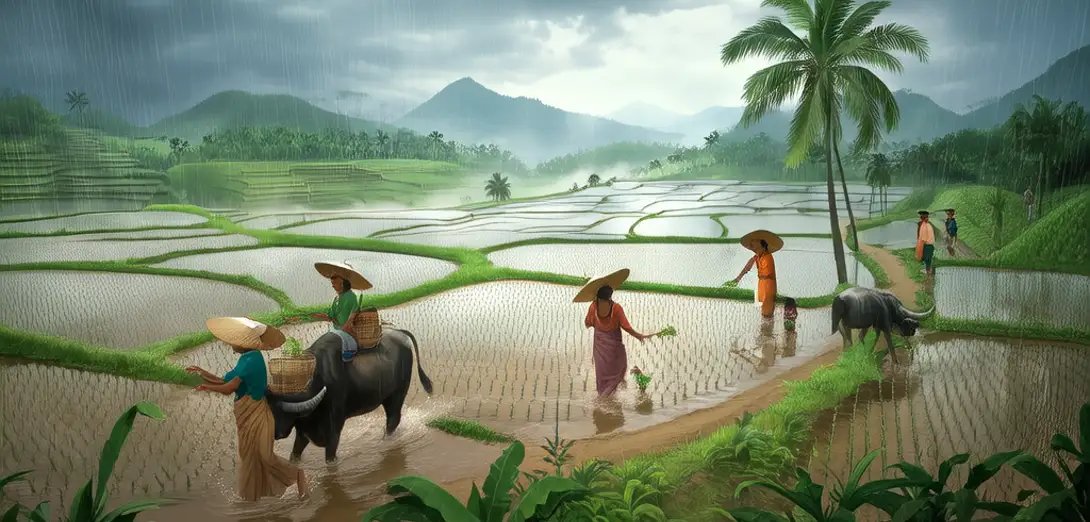
Farmers in India time planting and harvesting around monsoon onset, which varies by only about five days on average.
印度农民根据季风来临时间安排播种和收获,其平均变化仅约五天。
-
Urban flooding in Dhaka or Mumbai often results not from rain intensity alone, but from poor drainage and rapid land-use change.
达卡或孟买的城区内涝,往往不仅源于雨强,更因排水不畅和土地利用快速变化所致。
-
Climate models suggest monsoon onset may delay slightly this century, while rainfall extremes become more frequent.
气候模型预测,本世纪季风来临时间可能略有推迟,而强降雨事件将更频繁发生。
-
In Myanmar, traditional rice varieties grown before the monsoon still thrive in flood-prone delta areas today.
缅甸三角洲易涝地区至今仍种植着季风前栽培的传统水稻品种。
-
The Arabian Sea branch brings moisture to Pakistan’s Indus Valley, supporting wheat and cotton farming despite arid conditions.
阿拉伯海分支为巴基斯坦印度河流域带来水汽,使干旱条件下的小麦和棉花种植成为可能。
-
Meteorologists now use satellite data and AI to improve monsoon forecasts, helping governments prepare for droughts or floods.
气象学家如今利用卫星数据和人工智能改进季风预报,助力政府应对干旱或洪灾。
Go deeper · 在阅读器里可以
- Listen line-by-line — 逐句点读与跟读,把「听懂」练成习惯。
- Save & review — 加入书架,方便下次接着练。
- Unlock more lessons — 后续课时与全书音频可在阅读器中按单本或会员继续使用。
本课重点词汇
点击下列单词可查看中文释义与音标;若首次查询,系统可能需要几秒钟准备结果。想建立长期词汇习惯(选词、复习、词根、语块等),可配合 词汇学习汇总 一起用。
本课学习要点
篇名提示:中文标题「季风:风如何重写日历」与英文标题对照,可帮助您快速判断本篇话题与难度是否合适。
下面是与本课难度相关的语法与阅读策略提示;系统复习时打开 语法指南,点左边即可跳到对应段落。
本课可能混合多种时态或从句。建议先标出每个谓语动词,判断它属于哪条时间线(现在、过去还是将来),再看从句由哪个词引导、修饰谁。
遇到被动结构 be + 过去分词,先还原「谁做了什么」,再理解作者想突出的是动作还是承受者。
小提示:并列句里 and/but/or 连接的两个部分,时态通常保持一致或按时间逻辑递进。